
Nature Almanac: Hardy prairie plants thrive in dry conditions and provide critical food for late-summer insects
By Peter Ruprecht, with Ruth Carol Cushman and Stephen Jones
September 2026
In many years, when the snow-on-the-mountain plant (Euphorbia marginata) blooms on dry, gravelly prairies, it’s a sign that snow may soon be falling in the mountains nearby. In this year’s hot, dry summer, some wildflowers, including snow-on-the-mountain, seem to have flowered earlier and more sparsely than usual. Other traditional late summer bloomers, like curlycup gumweed and broom ragwort, are stepping up to provide critical food for a variety of insects.
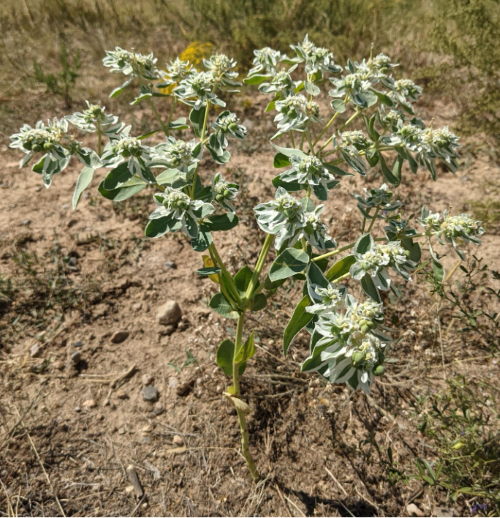
Snow-on-the-mountain is a hardy plant that succeeds even on dry rocky prairies. Photo by Peter Ruprecht.
Snow-on-the-mountain has tiny white flowers with bolder green and white striped bracts surrounding them. Like many Euphorbias, the plant contains a white latex sap that can irritate the skin and eyes. It’s fairly common throughout the high plains from the Dakotas to central Texas but is at the edge of its range in Boulder County. iNaturalist shows local observations clustered along Hwy 36.
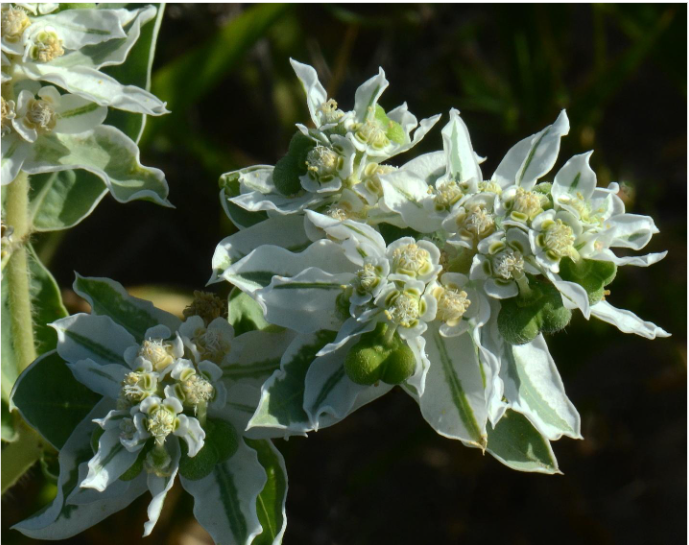
Dramatic white-striped bracts surround the much smaller flowers of a blooming snow-on-the-mountain. Photo by Stephen Jones.
This summer’s heat has not fazed curlycup gumweed (Grindelia squarrosa), a native species that thrives in disturbed and marginal habitats. While many other plant species appear stunted or dormant this year, gumweed has expanded into patches that can be 100 feet long. It’s aptly named: the phyllaries on the flower cup curve gracefully downward, and the entire plant – though especially the flowers – is coated with an aromatic sticky gum. It can grow as a few sparse stalks or a dense bush up to two feet across. In either case the ends of the stems will be covered in bright yellow flowers from August to early October.
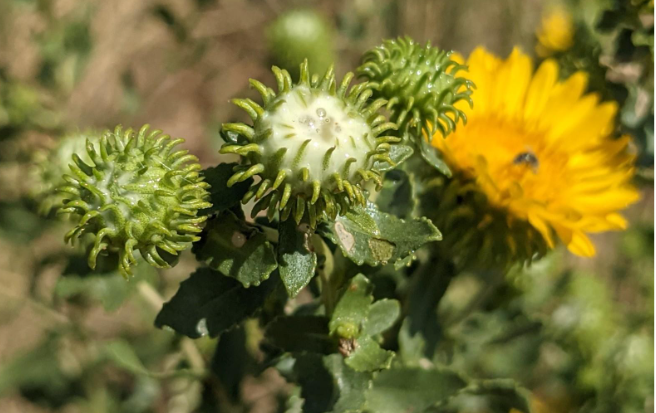
The curled phyllaries and gummy resin on the flower cups give curlycup gumweed its name. Photo by Peter Ruprecht.
As might be expected for a plant with “weed” in its common name, curlycup gumweed is not loved by everyone. Ranchers don’t like that it is unpalatable to livestock due to the many bitter chemicals in its leaves. Many other people associate it with ugly “waste” areas such as graded roadsides or soil dumps.
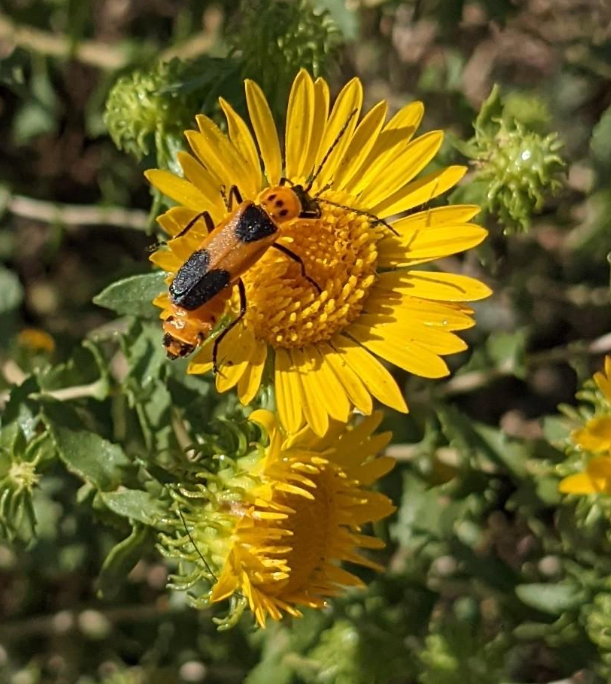
A Colorado soldier beetle feeds on a curlycup gumweed flower, taking advantage of one of the few sources of pollen and nectar on the late summer prairie. Photo by Peter Ruprecht.
Despite these perceptions, curlycup gumweed is a superstar in terms of its habitat benefits. In particular, it provides a vital food source for pollinators during late summer when little else is blooming. The Xerces Society has named it a favorite native plant for its many services to beneficial insects. But don’t just take their word for it – look carefully into each flower on a gumweed plant and you’re likely to see a native bee, wasp, or beetle gratefully feeding on pollen or nectar.
It has benefits for people as well. Native Americans used it to treat respiratory, digestive, and reproductive ailments. Men of the Crow tribe held their tall pompadour hair styles in place using gumweed sap. Today, it’s a candidate for use in wildfire-slowing greenstrips because it stays green and resistant to burning throughout the dry summer. But perhaps we should most appreciate curlycup gumweed as a beneficial native plant that can colonize disturbed habitats before noxious invasive weeds take over.
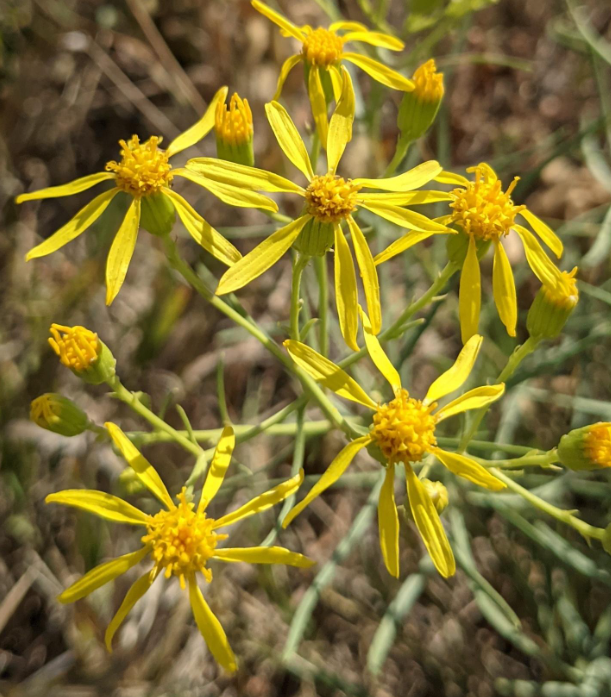
The bright yellow flowers of broom ragwort blaze back up at the September sun. Photo by Peter Ruprecht.
Another post-monsoon bloomer that’s important for pollinators is broom ragwort (Senecio spartioides.) Like gumweed, it is happy to grow in marginal or disturbed soils. In September its many-stemmed figure stands above most neighboring plants. The bright yellow flowers are surrounded by long narrow petals that look like rays of the sun. As the seeds ripen, they develop fine white filaments to aid in airborne dispersal. Eventually the whole top of the plant will appear to be covered in small white cottonballs.
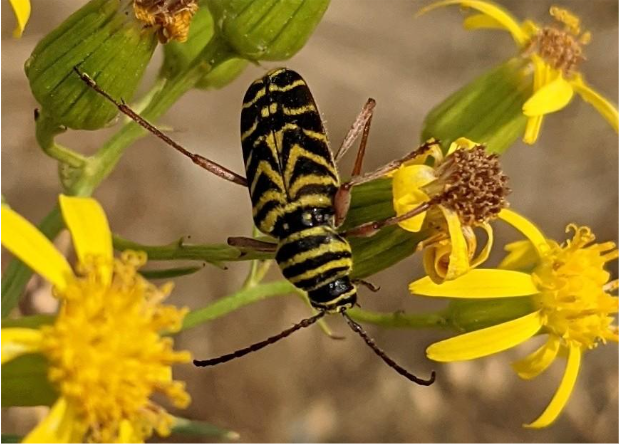
The locust borer beetle tanks up on pollen from late summer flowers, including broom ragwort, before flying off to lay eggs in the bark of a black locust tree. Photo by Peter Ruprecht.
Other September Events
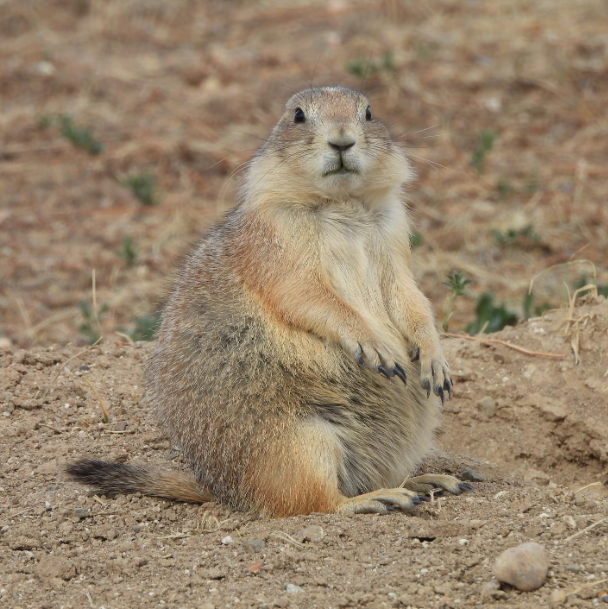
This black-tailed prairie dog has been busy packing on the ounces before winter descends. Photo by Peter Ruprecht.
Flocks of migrating sparrows, especially in the genus Spizella, feed along weedy or brushy roadsides or fencerows.
Bull elk bugle to gather harems of females. While the area around Estes Park is the most famous local site for viewing this rutting behavior, amorous elk can also be found in a few plains locations including the Coal Creek valley just west of Superior.
In preparation for the upcoming winter, black-tailed prairie dogs gain extra weight. A big male might top out around four pounds.
American plums ripen, providing an excellent source of calories for coyotes and black bears. Unfortunately, the introduced plum pocket fungus ruins a significant amount of wild plum fruit each year.
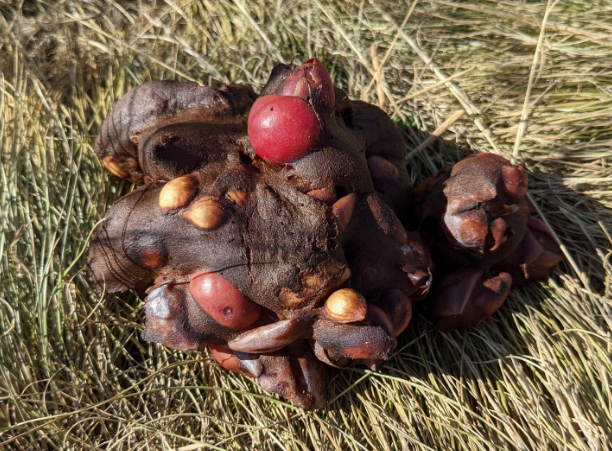
American plums, seen here filling a coyote scat, are an important food source for animals preparing for colder weather. Photo by Peter Ruprecht.
Nature Almanac is a monthly series by Stephen R. Jones and R. Carol Cushman, along with other guest contributors. Ruth Carol Cushman and Stephen Jones are authors of A Field Guide to The North American Prairie (Peterson Field Guides) and Wild Boulder County: A Seasonal Guide to the Natural World.