A Birder’s Paradise
Calliope Scott
2026 BCAS Coastal Maine Bird Studies for Teens camp scholarship recipient. All photos in this article were taken by the author.
When a normal person considers paradise, they may think of a tropical island dotted with palm trees and coconuts and sunny sandy beaches. For a birder, however, this vision may change just a bit. For one, the island doesn’t necessarily need to be tropical. Any environment would work, as long as it’s habitable to a wide range of birds. The vegetation has no need to consist of palm trees. They could be tall, somewhat ominous red spruces for all a birder cares. The only thing that really matters is the tweedle-dee tweedle-dee tweedle-dee of a Carolina wren somewhere in the branches above. The beaches have no need for sand. Even a rocky outcropping is a great place for a resting razorbill or cormorant.
There is, indeed, a place that fits these descriptions. Allow me to provide a view, however brief, of the Birder’s Paradise, Hog Island.
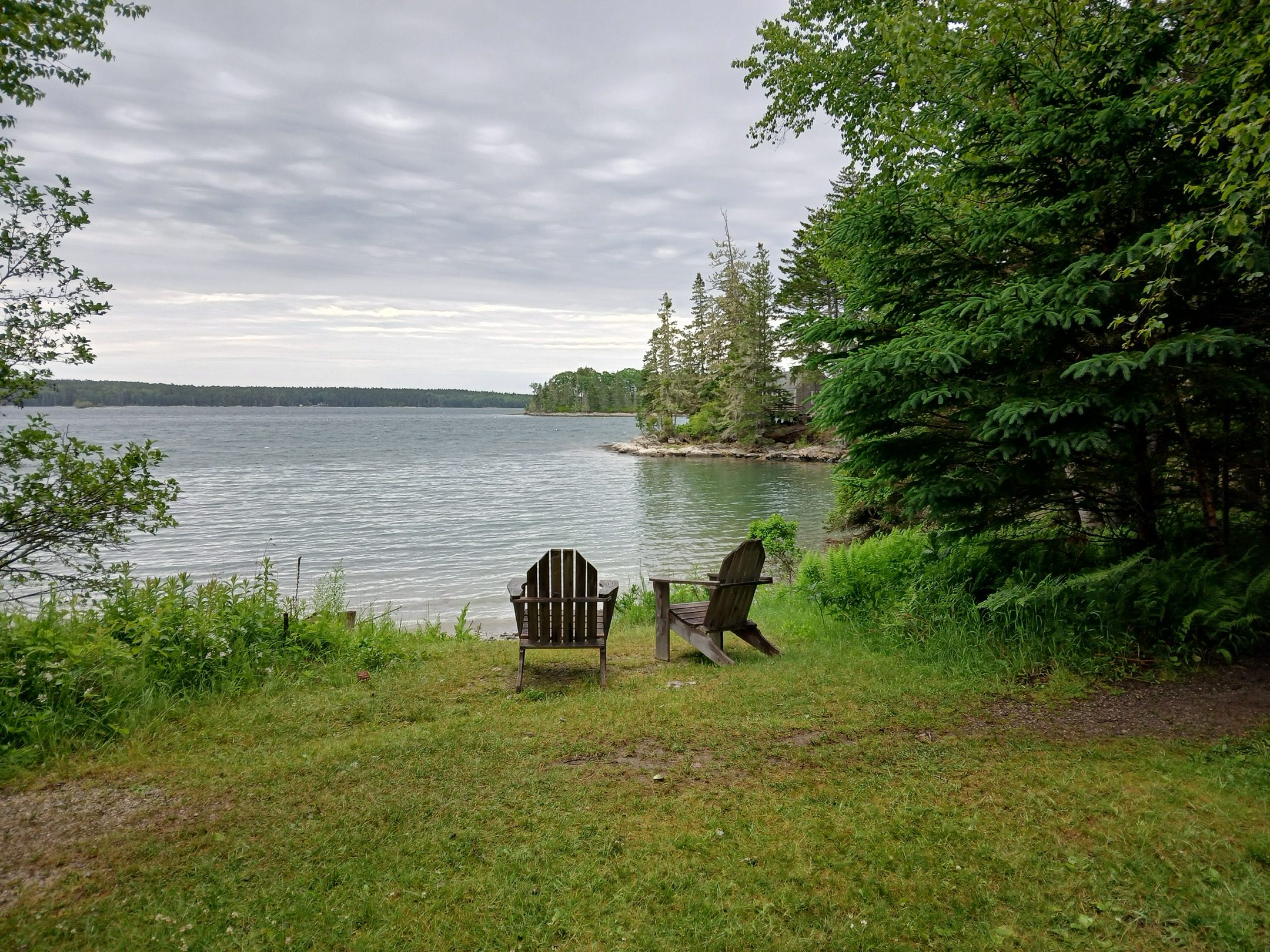
Hog Island, photo by Calliope Scott.
The first thing I noticed when I stepped aboard the small boat that would whisk me what seemed like miles from the mainland was a couple black guillemots flapping over the water. A lifer for me, the Coloradan who had never been far enough northeast to have spotted such a bird.
The second thing was how kind everyone was.
This kindness wasn’t a fake, saccharine sort. It was warm and inviting. We didn’t yet know each others’ names, but there was already a deep understanding that can only be felt among birders. It was not what I had been expecting. I didn’t know what to expect. On the entire drive, I felt both nervous and excited for my upcoming experience.
Will I seem silly compared to everyone else? Will they not like me? Will I make a friend? Will they look down on me for knowing virtually nothing about Maine birding? All these questions and more swirled in a seemingly endless tornado through my mind. But then I got on that boat, and my fears started to look unrealistic as I got to know the people around me.
I thought I’d make one or two friends at Hog Island. I was wrong. I’d venture to say I made some sort of connection with all nineteen other teens at the camp. Not only was I with people who knew what an Atlantic puffin is (you’d be surprised how often I talk about them at school and people look at me like I've grown a third eye), but I got to stand right next to them as we watched the charismatic black-and-white birds scoop fish out of the ocean. I have special memories of watching four red-breasted nuthatch fledglings line up on a branch for my friends to snap the perfect picture. Together, we got to meet real bird experts and begin considering our own future careers with wildlife.
There’s no doubt that Hog Island is a very special place, and I will certainly never forget the beautiful views, unique wildlife, and, of course, the many wonderful birds. Nor will I forget the people and connections I made on this unforgettable trip.
Boulder County Audubon Society annually offers scholarships to teens to attend birding camps. Students 15-17 years old who reside in Colorado are invited to apply for these scholarships. The application typically opens in December with a due date in January or February. Preference is given to Boulder County Audubon teen naturalists and students who indicate financial need. Awardees demonstrate a strong interest in natural sciences.