Nature Almanac: Goldfinches Time Nesting to Take Advantage of Ripening Thistles
Peter Ruprecht, with Ruth Carol Cushman and Stephen Jones
August 2026
In our area, bird nesting season begins as early as January, when Great Horned Owls start incubating eggs. By early June, most songbirds are on eggs or tending fledglings. Late to the party are goldfinches, who often don’t begin building nests until July. Why the delay?
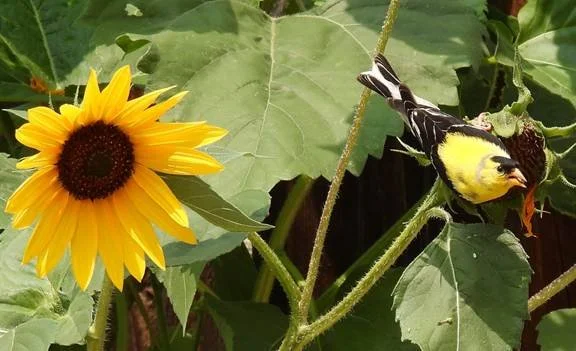
Goldfinches, including this male American Goldfinch, devour thousands of native sunflower seeds in late summer, while depending on thistle down to build their nests. Photo by Peter Ruprecht.
Both of our two local goldfinch species, American and Lesser, depend on thistles for food and nesting material. Since thistles don’t produce seeds with downy fibers until the heat of summer, goldfinches hold off on nesting until those important resources are widely available.
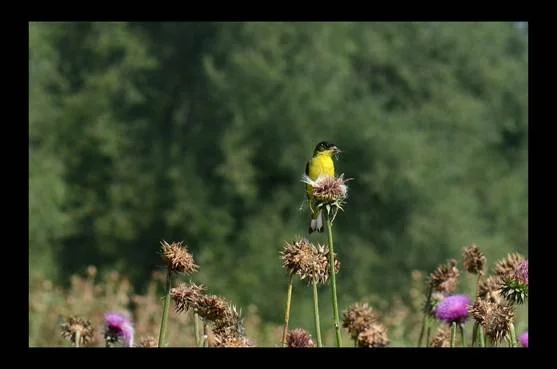
Lesser Goldfinches depend on thistle down and seeds for nesting material and food. Photo by Stephen Jones.
Thistle down is a key component of American Goldfinch nests, used to form a tightly packed and waterproof inner cup that cradles a clutch of 3-7 eggs. The whole nest is quite small, barely three inches across, and secured to a twig fork with grass fibers or spiderwebs.
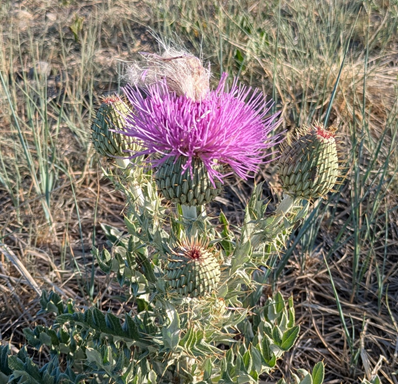
Wavyleaf thistle is a native species that provides down and seeds for nesting goldfinches. Photo by Peter Ruprecht.
Since goldfinches eat almost nothing but seeds, they also need to time their breeding cycle to the availability of nutrient-packed fresh seeds. Their sharp, conical bills are adept at extracting and hulling small seeds, not just from thistles but also from native sunflowers. At feeders, goldfinches are attracted to nyjer seeds, which, although frequently marketed as “thistle,” are actually produced by a northeast African daisy.
Unlike many songbirds who focus on collecting insects for their chicks, goldfinches start their young out on a diet exclusively of seeds. Adults regurgitate a porridge of crushed and partially digested seeds for their nestlings and fledglings. An interesting advantage to this restricted diet is that goldfinches are less susceptible to successful nest parasitization by cowbirds, who lay their eggs in the nests of other songbirds. Cowbird hatchlings require protein-rich bugs and fail to thrive when fed nothing but plant material.
Once the young goldfinches fledge, the adults, especially the male, continue feeding them for several weeks until they learn to forage independently. Some goldfinch pairs will then start a second brood, which means that adults with dependent young can be seen well into October.
As summer wanes, goldfinches often gather in flocks in large stands of native sunflowers. They dangle acrobatically from the swelling seed heads, gorging on up to eight seeds per minute. If a predator threatens, clouds of yellow and black finches burst into the air as if the flowers themselves are taking flight.
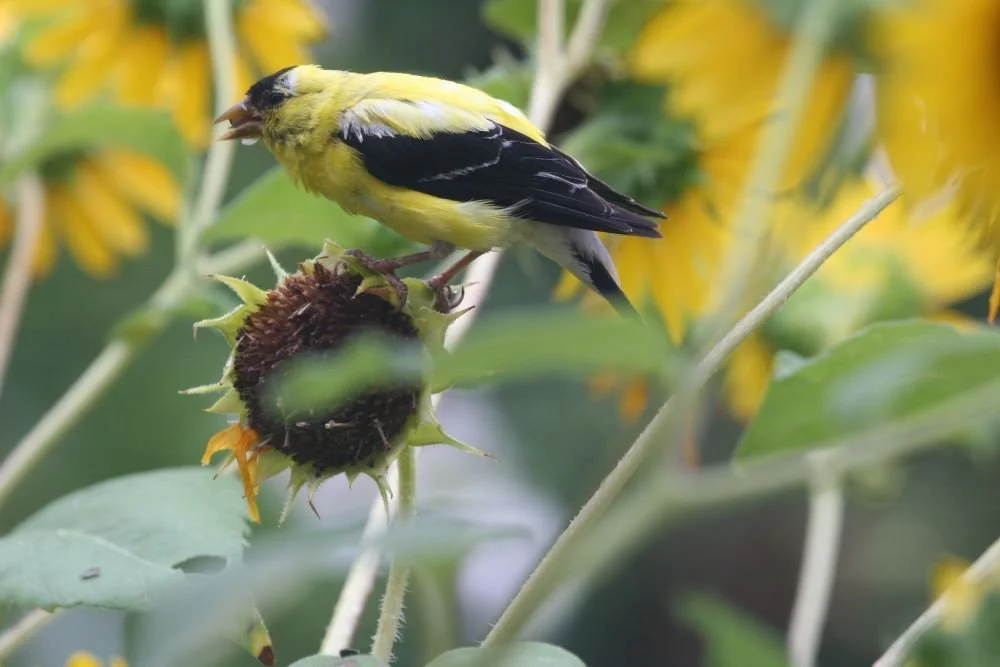
Male American Goldfinch on a sunflower. Photo by Glenn Cushman.
Many American Goldfinches spend the winter in the plains of Boulder County, though they seem less visible than in breeding season because the males switch their bright yellow breeding plumage for a duller outfit. Although most Lesser Goldfinches head farther south for the winter, at least a handful often show up on the Boulder Christmas Bird Count.
The Colorado Breeding Bird Atlas indicates that in the last few decades, Lesser Goldfinches have increased their range in the northeast quadrant of the state. Data from eBird and other studies show dramatic expansion in Wyoming and the Pacific Northwest as well. It appears that this expansion has been facilitated by both climate change and habitat modifications that favor thistles and other weedy plants.
Other August Events
Pine squirrels and Steller’s Jays feast on ripening beaked hazelnuts that grow along shaded creeks in foothills canyons. It’s very rare to find a fully mature nut because most bushes are picked clean by late summer.
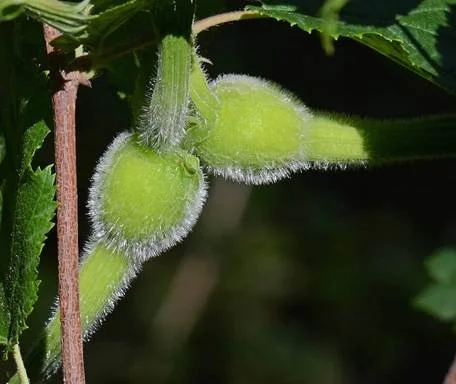
Beaked hazelnut fruits ripen in late summer. Photo by Stephen Jones.
Peregrine Falcons who hatched in the Flatirons earlier in the summer disperse away from the foothills and may be seen honing their hunting skills near riparian corridors and the edges of reservoirs. Before long they will follow migrating shorebirds, which are a favored prey, south to their winter range along the Gulf Coast and Central America.
The Perseid meteor shower peaks overnight August 12th and 13th. This is one of the brightest and most prolific showers in the Northern Hemisphere and should be especially visible this year since moonlight won’t interfere. Expect to see the most meteor streaks between midnight and dawn.
As the monsoon rains wind down, the high prairies get a “second wind” and re-green. Warm season grasses such as big bluestem shoot up in height, develop their distinctively shaped seed heads, and produce tiny but exquisite yellow flowers.
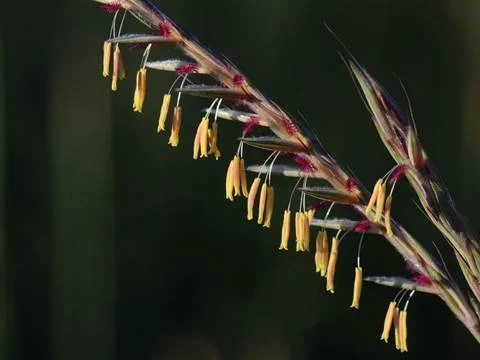
Big Bluestem blooms in the South Boulder Creek tallgrass prairie preserve throughout August. The dangling yellow flowers are the stamens, the fuzzy magenta flowers, the female parts. Photo by Stephen Jones.
Nature Almanac is a monthly series by Stephen R. Jones and R. Carol Cushman, along with other guest contributors. Ruth Carol Cushman and Stephen Jones are authors of A Field Guide to The North American Prairie (Peterson Field Guides) and Wild Boulder County: A Seasonal Guide to the Natural World.