July Nature Almanac: Nectar from Summer Wildflowers Helps Ladies and Admirals Achieve Flights of Wonder
By Stephen Jones, with Ruth Carol Cushman and Peter Ruprecht
July 2026
It seems appropriate that some of our most striking butterflies, the Ladies and Admirals, adorn some of our showiest summer wildflowers. Throughout July, August, and September, these members of the closely related butterfly genera Vanessa and Limenitis perch atop blossoms of snow-white yarrow, magenta bergamot, and flaming yellow rabbitbrush, hardly noticing our presence as they sip sweet nectar.
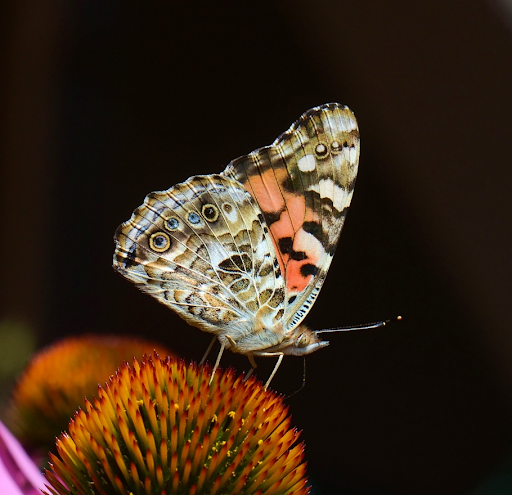
This Painted Lady (Vanessa cardui) was sipping nectar from a prairie coneflower in a South Boulder backyard. Note the five small eye spots on the hind wing of this butterfly as opposed to the two larger eye spots on the hind wing of the American Lady, below. Photo by Stephen Jones.
As summer turns toward fall, The Ladies may use flower nectar to help fuel one of the most impressive migratory flights on Earth.
Until recently, many scientists described the North American Painted Ladies’ spring flight from Mexico and the Desert Southwest to Colorado and clear up into Canada as a “dispersal” rather than a true migration. They theorized that the Painted Ladies who bred within the temperate zone couldn’t survive our winters either as adults or larvae and simply died off. Recent research from Europe has helped to change their minds.
For years, European scientists had wondered if offspring of European Painted Ladies (also Vanessa cardui) who flew up from Africa to Britain each spring completed a southward flight back to Africa each fall. Using radar and ground observations by thousands of volunteers, they determined that clouds of painted ladies were, indeed, flying at high elevations toward Africa as the autumn cold settled in. Radar images revealed that around 11 million high-flying Painted Ladies entered the UK in spring 2009 with 26 million departing in autumn.
The scientists concluded that the species completes a 9000-mile circular migration from tropical Africa north to Great Britain and Scandinavia and back each year. They noted that this migration is roughly twice as long as the celebrated migration of North American Monarch butterflies to and from the highlands of central Mexico.
Richard Fox, Surveys Manager at Great Britain’s Butterfly Conservation, said: “The extent of the annual journey undertaken by the Painted Lady butterfly is astonishing. This tiny creature weighing less than a gram with a brain the size of a pinhead and no opportunity to learn from older, experienced individuals, undertakes an epic intercontinental migration in order to find plants for its caterpillars to eat.”
Similar research conducted in the United States has begun to indicate that many of our Painted Ladies are, indeed, undertaking a similar return migration to Mexico each autumn and that as many as 17 billion individuals may take part in this journey.
As with the Monarchs, it takes several generations to complete the flight, with the fall migrants probably living the longest and traveling the farthest. The spring migrants seem to move northward in “generational hops,” with adult females pausing after a few weeks and laying eggs, leaving their offspring to continue the journey.
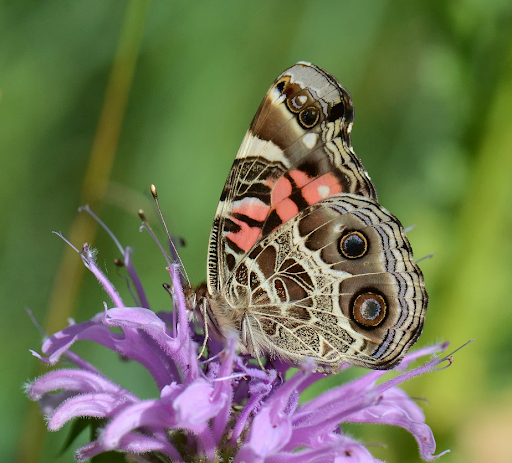
American Ladies (Vanessa virginiensis) often sip nectar from wild bergamot, a knee-high mint that flourishes in foothills meadows. Photo by Stephen Jones.
Two other Vanessa species found in Colorado complete impressive flights of their own. American Ladies breed throughout the United States and southern Canada and fly to the southern states to overwinter.
West Coast Ladies overwinter as adults along the Pacific Coast, dispersing eastward and northward into the mountains during spring and summer. Though they are considered uncommon east of the Continental Divide, we sometimes see individuals nectaring on backyard rabbitbrush plants in September and October.
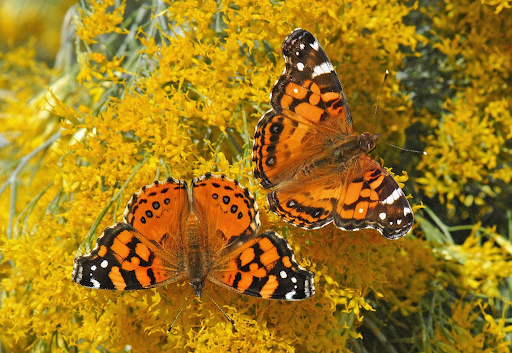
Both West Coast Lady (Vanessa annabella, lower left) and American Lady (V. virginiensis, upper right) alight on yellow rabbitbrush flowers in August and September. Note the distinctly squarish wing tips of the West Coast Lady and the slightly squarish wing tips of the American Lady, compared with the more rounded wing tips of the Painted Lady. Also note the separate, intensely blue eyespots on the hind wings of the West Coast Lady. Photo by Stephen Jones.
A fourth locally common Vanessa species, Red Admiral (named after the prominent red bands on its wings), has used its affinity for nettles and other weedy host plants to spread all the way across North America from Alaska to Newfoundland and south to Puerto Rico and Guatemala. Like the American Lady, Red Admirals typically fly northward in spring and southward in fall, over-wintering as adults.
In Boulder County we often see them perching on shrubs and stumps in streamside gulches, wet meadows, and urban parks. Before flowers bloom in spring, the adults sip tree sap oozing from the networks of holes drilled by sapsuckers.
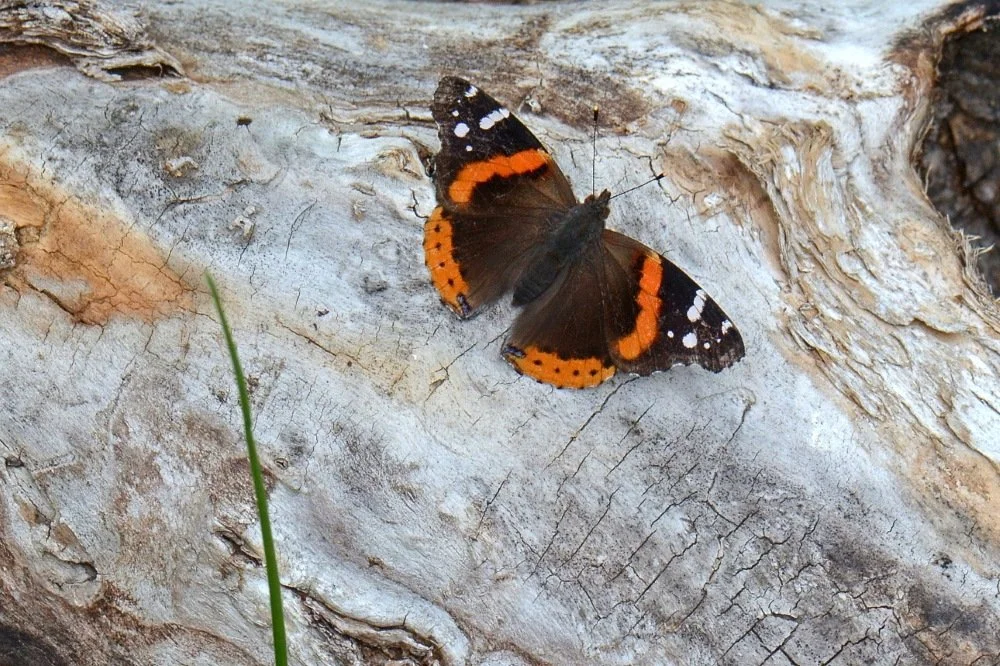
Red Admirals (Vanessa atalanta) often seem content to perch on a leaf or log, soaking up the summer sun. “Admiral” is a misnomer for this species, which is more closely related to the Ladies (genus Vanessa) than to Admirals. Photo by Stephen Jones.
We have only two common “true” Admirals (members of the genus Limenitis) in Boulder County. Weidemeyer’s Admiral (Limenitis weidemeyerii) is a large butterfly of meadows and aspen groves with prominent white stripes and red markings on its otherwise black wings.
Seeing one float by and alight on a fresh white chokecherry or yarrow blossom always makes our day. Esteemed Lepidopterist Robert Michael Pyle, author of several books on butterflies, once commented while leading a field trip that “Admirals should be more appropriately called, “Admirables.”
This non-migratory Rocky Mountain and Great Basin endemic ranges from the foothills to the high mountains. Its caterpillars overwinter while curled up in self-constructed leaf shelters.
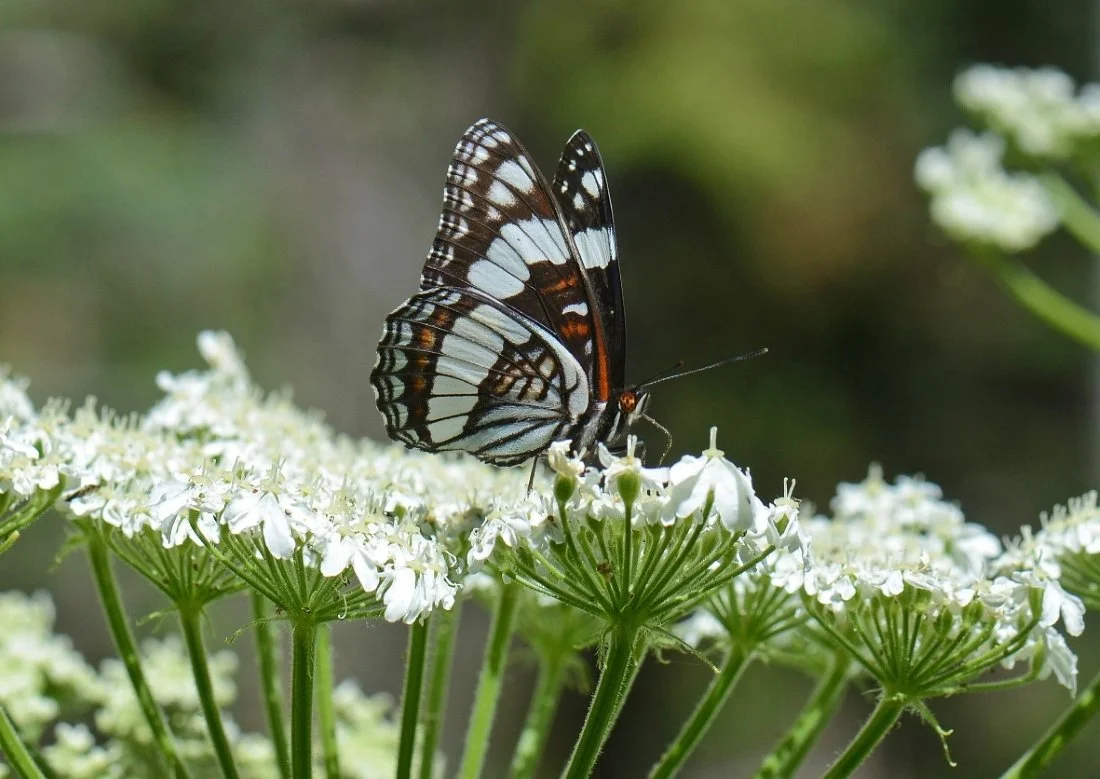
Showy white yarrow flowerheads provide the perfect complement to the intricate designs on the wings of this Weidemeyer’s Admiral (Limenitis weidemeyerii). The common name “Admiral” was inspired by the prominent white wing bars. Photo by Stephen Jones.
Our other common Admiral, believe it or not, is the Viceroy (L. archippus). But having spent millions of years evolving to resemble poisonous Monarchs, it doesn’t look much like the other Admirals.
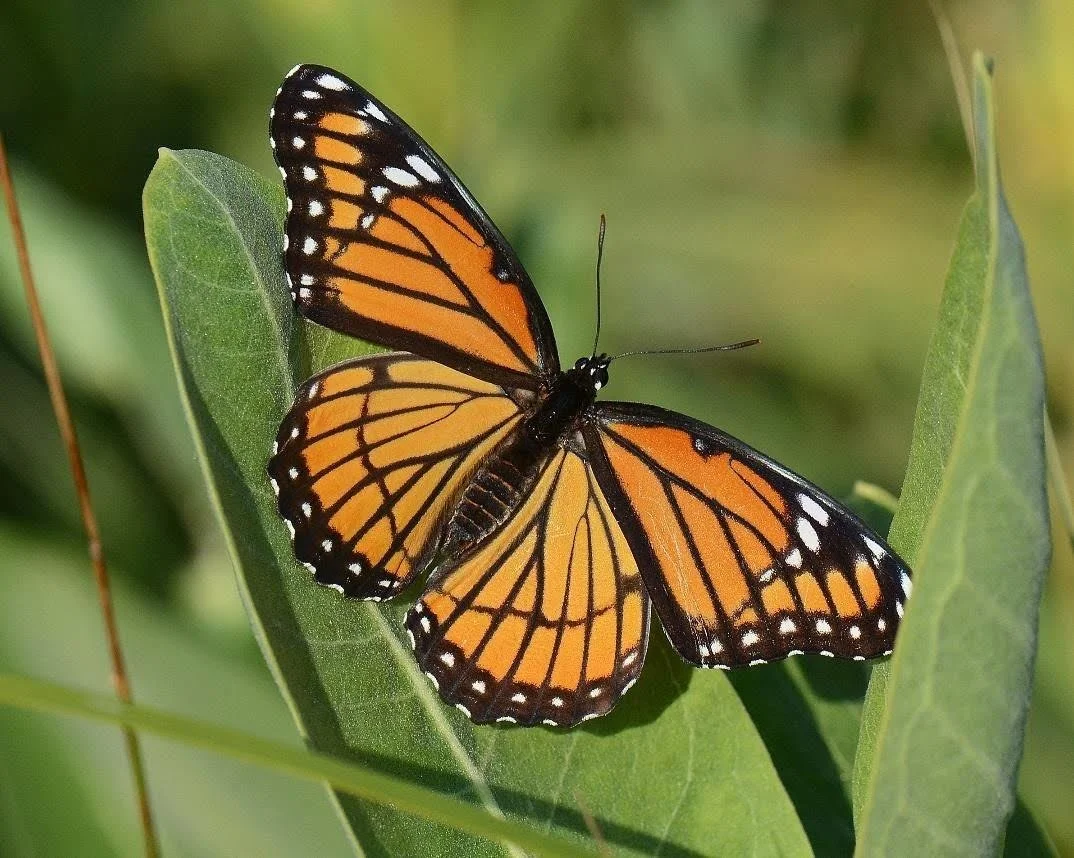
While you may see Viceroys perching on milkweed plants, their caterpillar hosts are predominantly willows and poplars. All that appears to remain of the Admiral stripes on this individual is the vertical band of four white spots near the tips of its wings, which may mimic the white spots on Monarch wings. Photo by Stephen Jones.
Getting close to nectaring butterflies opens our eyes and hearts to their world of taste, longing, and flight; and if we sit quietly beside a feeding butterfly long enough, we may grow to understand that they are curious about us.
Every once in a while, one will flutter up from its flowery perch, sail around our head, and land on an arm or shoulder, wondering what on earth this unusually sedentary human might be up to. She may even land on our nose, extend her proboscis, and taste us.
For more photos and descriptions of our local Ladies and Admirals, see Janet Chu and Stephen Jones. 2020. Butterflies of the Colorado Front Range.
Other July Events
American White Pelicans gather in flocks of a hundred or more on our larger lakes and reservoirs. The nearest nesting site is on a predator-proof island in Lower Latham Reservoir east of Greeley.
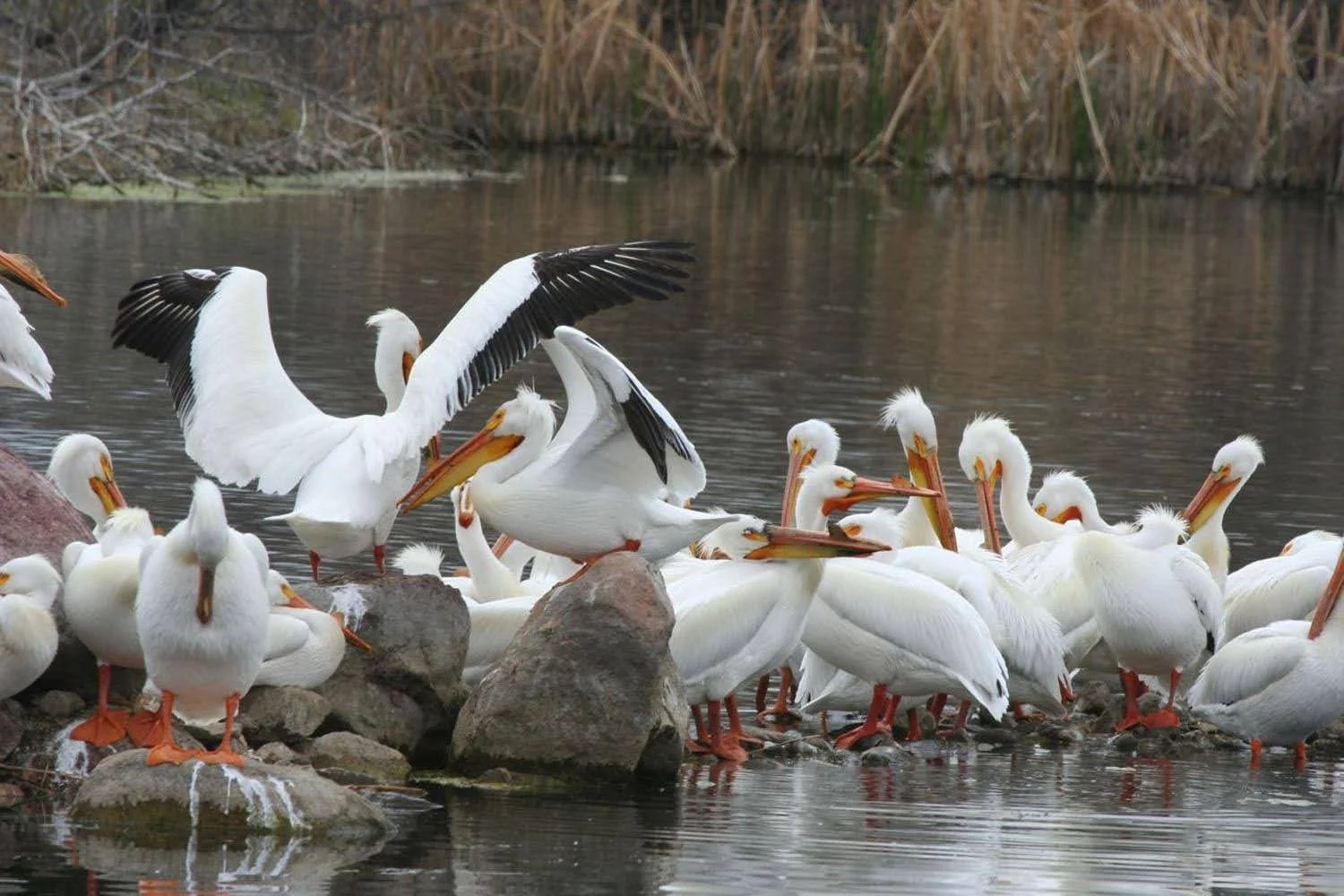
American White Pelicans at Walden Ponds. Photo by Glenn Cushman.
Marmots are usually born in June and appear above ground in July.
Common Nighthawks perform aerial courtship displays, making a “booming” sound as they dive toward the ground and air passes through their wings.
Colorado Columbines bloom in mountain aspen groves.
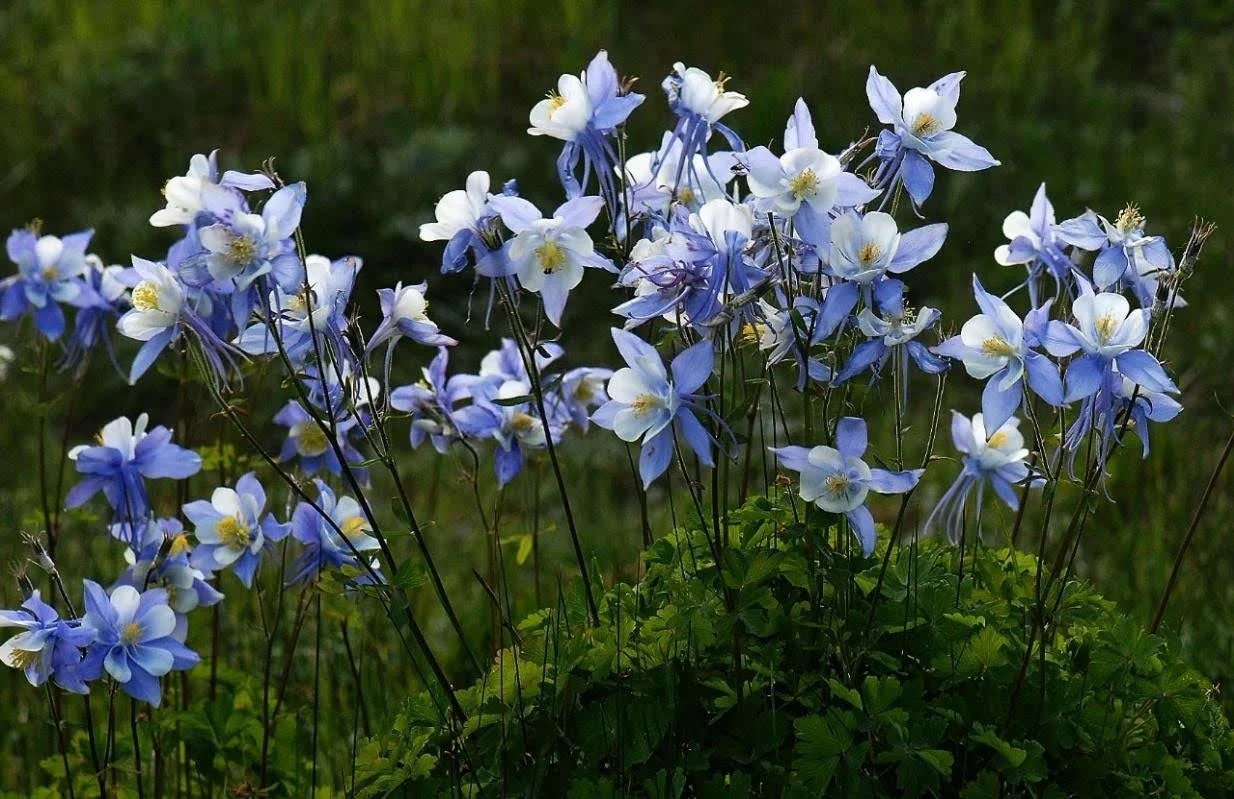
Colorado Columbines blooming in a meadow west of Hessie. Photo by Stephen Jones.
Nature Almanac is a monthly series by Stephen R. Jones and R. Carol Cushman, along with other guest contributors. Ruth Carol Cushman and Stephen Jones are authors of A Field Guide to The North American Prairie (Peterson Field Guides) and Wild Boulder County: A Seasonal Guide to the Natural World.