Teen Naturalists Tour the Rocky Mountain Raptor Program
By Julien & Lauren Pied
In February 2026, the Teen Naturalists from the Boulder County Audubon Society had their second outing of the year to learn more about birds of prey. The group met in Ft. Collins at the Rocky Mountain Raptor Program to understand why the raptors were there, how volunteers help them, and what research opportunities the foundation provides.
The first stop on our tour was listening to volunteer Courtney Rella talk about the overall program and current diseases that impact raptors. There are two diseases we learned about that impact raptors: the first is West Nile virus, a disease transmitted by mosquitoes which causes encephalitis, or swelling of the brain. This disease is prevalent in the summertime. The other is avian influenza, also known as H5N1. Avian influenza spreads particularly well in cold, dry climates such as ours and is unfortunately highly fatal in birds; luckily, some of them are found in time and brought to the rehab center to receive treatment. These diseases, however, are only two of the many reasons the raptors are there.
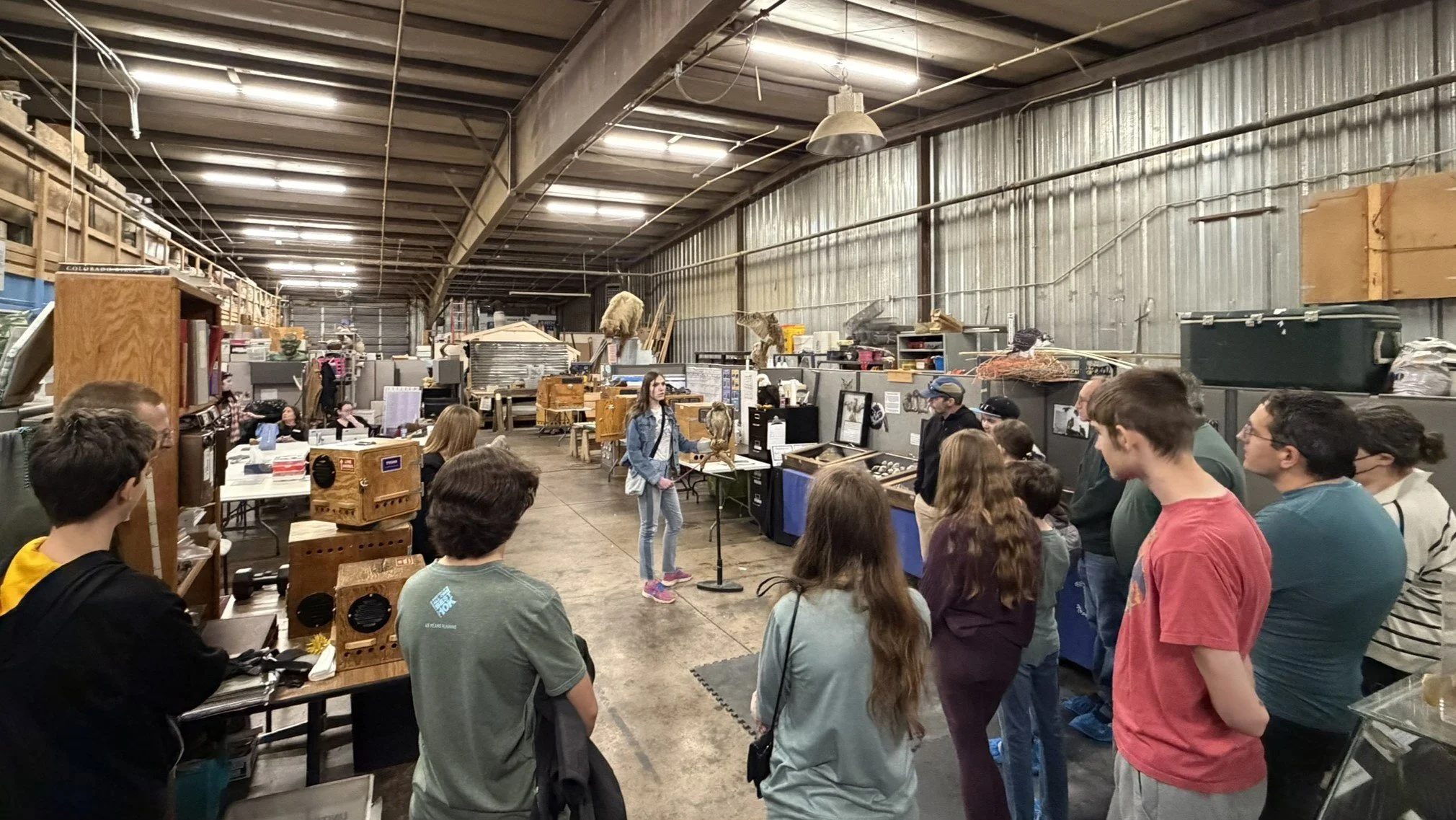
RMRP Education Volunteer Tori McKee handles Hazel, the Red-Tailed Hawk, for tour group. Photo by Courtney Rella.
Anthropogenic, or human-caused, factors present major risks for raptors as well. Some of these factors include wires and nets, such as agricultural baling twine or soccer nets; untreated windows that birds can crash into; and domestic housecats, which may attack younger fledglings on the ground. Ranchers and farmers who see raptors eating the carcasses of their livestock may also incorrectly believe that it is the raptor who killed the animal, and take action by shooting the bird. Whether from being shot directly or from eating prey which has been shot by a bullet, even the smallest amount of lead can be deadly for birds. Finally, methane plumes, which are burning releases of methane gas, can melt birds’ wings, rendering them unable to fly. These plumes are commonly found at oil and gas production sites, as well as at landfills.
The Rocky Mountain Raptor Program aims to help as many raptors return to the wild as possible. This is easier said than done, though, as the raptors — comparable to elite athletes! — need to be in perfect or near-perfect condition to be released, especially since they often migrate long distances, sometimes even across continents. During the raptors’ time at the program, they receive excellent care and nutrition, with diets tailored to the individual. They also receive outstanding medical treatment and enrichment activities, both indoors and outdoors.
After learning so much about these challenges, we were finally able to meet some of the educational ambassador birds: a Great Horned Owl, an American Kestrel, a Swainson's Hawk, two Red-Tailed Hawks, and an Eastern Screech-Owl.
Personal preferences aren’t just a trait found in humans: many of these birds have favorite caretakers (and the caretakers have their favorite birds, too). Also, some of the raptors are very picky, and don't enjoy all the food that they are given; the volunteers are able to adapt their diets to the foods they like best. These diets primarily consist of frozen food, kept in freezers in the building, but in the cases when raptors are about to be released back into the wild, they eat live food that trains them to hunt by themselves.
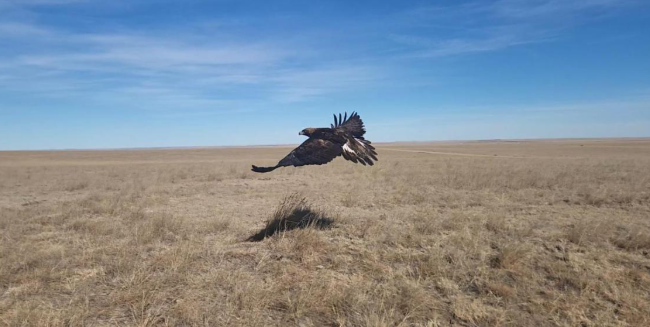
A Golden Eagle being released earlier this month at Pawnee Grasslands after receiving months of treatment at RMRP. Photo courtesy of Rocky Mountain Raptor Program.
Sadly, it is estimated that only around 30% of birds and wildlife that someone attempts to take to rehabbers are able to be released; many arrive dead or are so injured they must be humanely euthanized. With the high level of care offered, 70-80% raptors that are treatable are able to be released. But this isn’t just a sad statistic: birds who survive but are not able to be released can contribute to learning, and have a good life at the rescue. For other raptors, their initial reasons for being there prove too difficult to overcome. Even when these raptors don’t survive, though, their lives still continue to be valuable in other ways, such as researching diseases and treatments or providing educational opportunities. Some of the birds’ feathers are even given to Native Americans to be used in traditional clothing or headwear.
We would like to thank Courtney and all of the other volunteers at the Rocky Mountain Raptor Program for taking their time to give our group such an in-depth tour, and for everything they do for the raptors. Last but not least, we learned that up to 90% of the funding they receive is only from donations, so we would encourage anyone who is able to donate to do so!
Note from Editor: This article was originally published in the February 2026 On The Wing Newsletter. The second to the last paragraph has been updated here to more correctly reflect the rehabilitation rate of wildlife and raptors. Thank you Courtney Rella for this correction.
Courtney Rella provides additional information on small actions that everyone can take to protect raptors:
Eliminate Trash on Roads - The leading cause of raptor injury is vehicle strikes. To help prevent these strikes, eliminate any trash on roads. Even biodegradable items as small as the top of a strawberry or an apple core or banana peel lure a rodent to the road, which then lures a bird of prey and then they are struck by a vehicle.
Make Your Windows Bird Friendly - Window strikes are another top reason the birds are injured and killed. Windows reflect the sky or surrounding trees and bushes. Birds interpret this as an area they can fly through. To prevent this, you need to make it obvious that there is a solid object there. Place decals 2 inches apart on the outside of windows; Feather Friendly and Bird Divert are two excellent bands but there are others. There are other solutions — both DIY and commercial like glass pen/marker lines or hanging cords/wires. One or two decals on a large window isn’t enough — these need to deter beings as small as a hummingbird. The UV decals are nice, but they do fade. You can learn more and see the bird safety rating for different products on the American Bird Conservancy’s Collision Prevention website.
Know Who Your Local Rehabber Is and Take Injured Wildlife There — To be able to quickly assist any injured bird or other animal, it is good to know who your local rehab facilities are and what animals they work with. You can always look up the nearest rehab through Animal Help Now!. If you have found an injured raptor or other wildlife, it is a good idea to call the local rehab facility before to make sure they can take it at that time.
Rocky Mountain Raptor Program serves northern Boulder County all the way up to the northern tip of Colorado and has a 24 hour hotline.
Learn more about what to if you encounter injured bird or other wildlife on the BCAS Injured Wildlife webpage.
To learn more about BCAS Teen Naturalists activities and find out when the next trips are, visit the Teen Naturalists webpage.