Teen Naturalists Delve Into DMNS Collections
By Jennie Rabe, Teen Naturalist
On Tuesday, February 17th of 2026, a group of Teen Naturalists went with trip leaders Carol Kampert, Dave Sutherland, and Courtney Rella to the Denver Museum of Nature and Science, getting a behind the scenes tour of the vertebrae collection from Andrew Doll, the collections manager. Although some were more reserved than others, all teen participants appeared to be excited.
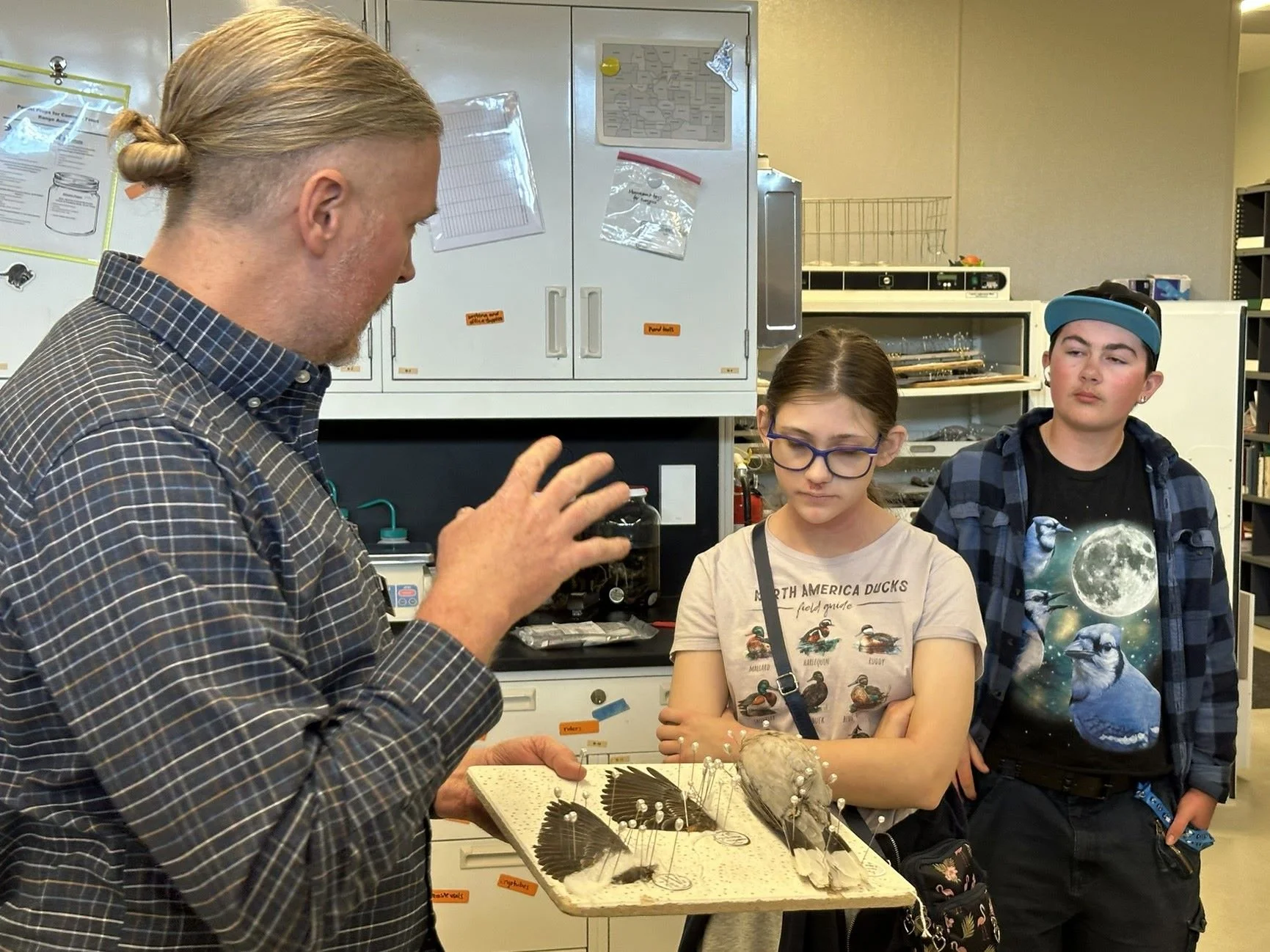
BCAS Teen Naturalists viewing how specimens are prepared and then pinned to dry. Photo by Dave Sutherland.
The group first got to see the lab where specimens are dissected and stuffed, then dried. Some teens peeked into a large bin with beetles cleaning bones by eating flesh off then. Other teens didn’t like bugs or the odor produced and hung back.
Next, some teens stepped into a closet with already cleaned bones drying out. Once again, some teens were offended by the fetor and stayed back. Among those bones were that of Rinny and JonHi, the Denver Zoo’s recently passed Malayan Tapirs.
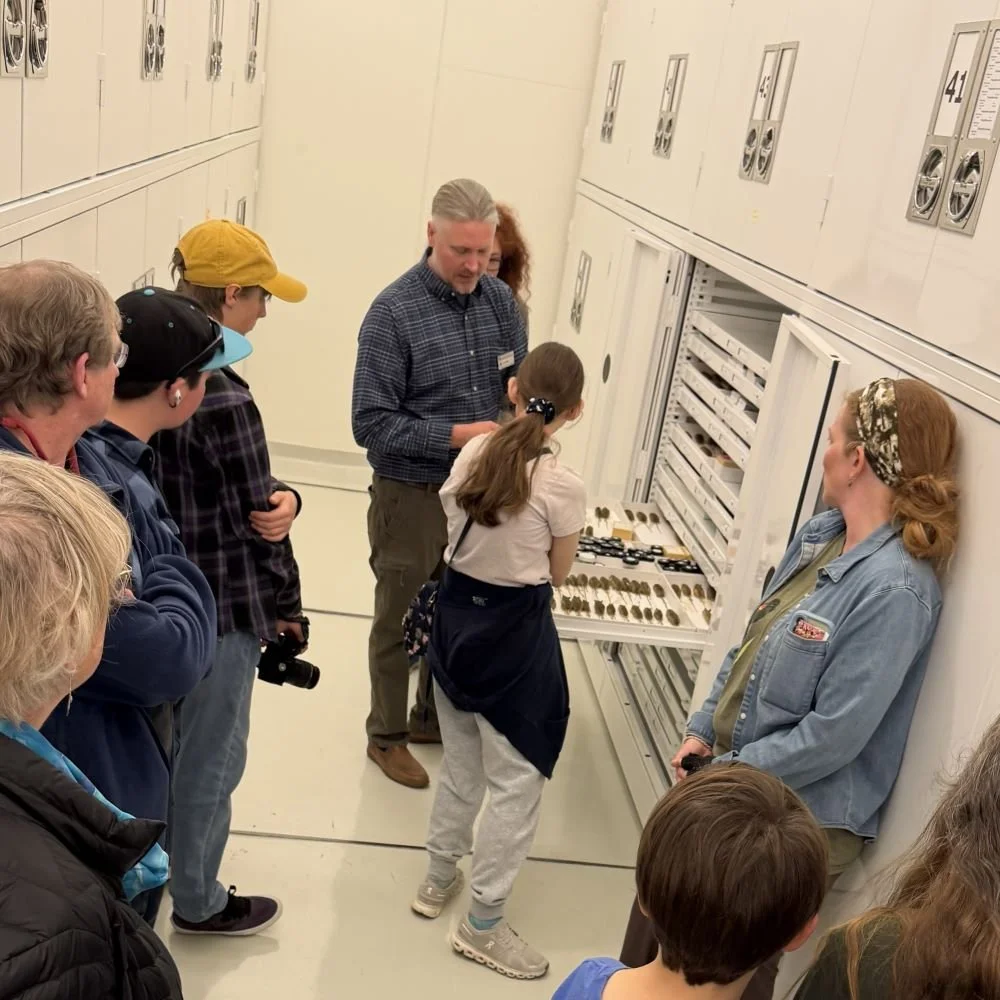
Teen Naturalists viewing specimens of Prebles jumping mouse in the Denver Museum of Nature and Science. Photo by Courtney Rella.
After that, the group headed downstairs to the specimen collections, where they saw a range of animals. Teens were taught about the organization of specimens and got to look around. There were a variety of taxidermy animals from past dioramas. However, most of the collection consisted of preserved specimens. After observing the lifelike animals, Andrew showed the group several examples of specimens, including, but not limited to, mice, finches, and the bones of an elephant.
Towards the end of the tour, participants viewed specimens of extinct animals. Passenger Pigeons and Carolina Parakeets were among them, as well as the eggs of an Elephant Bird. Only 35-40 of these fully intact eggs exist in the world, and the group was standing in front of two of them!
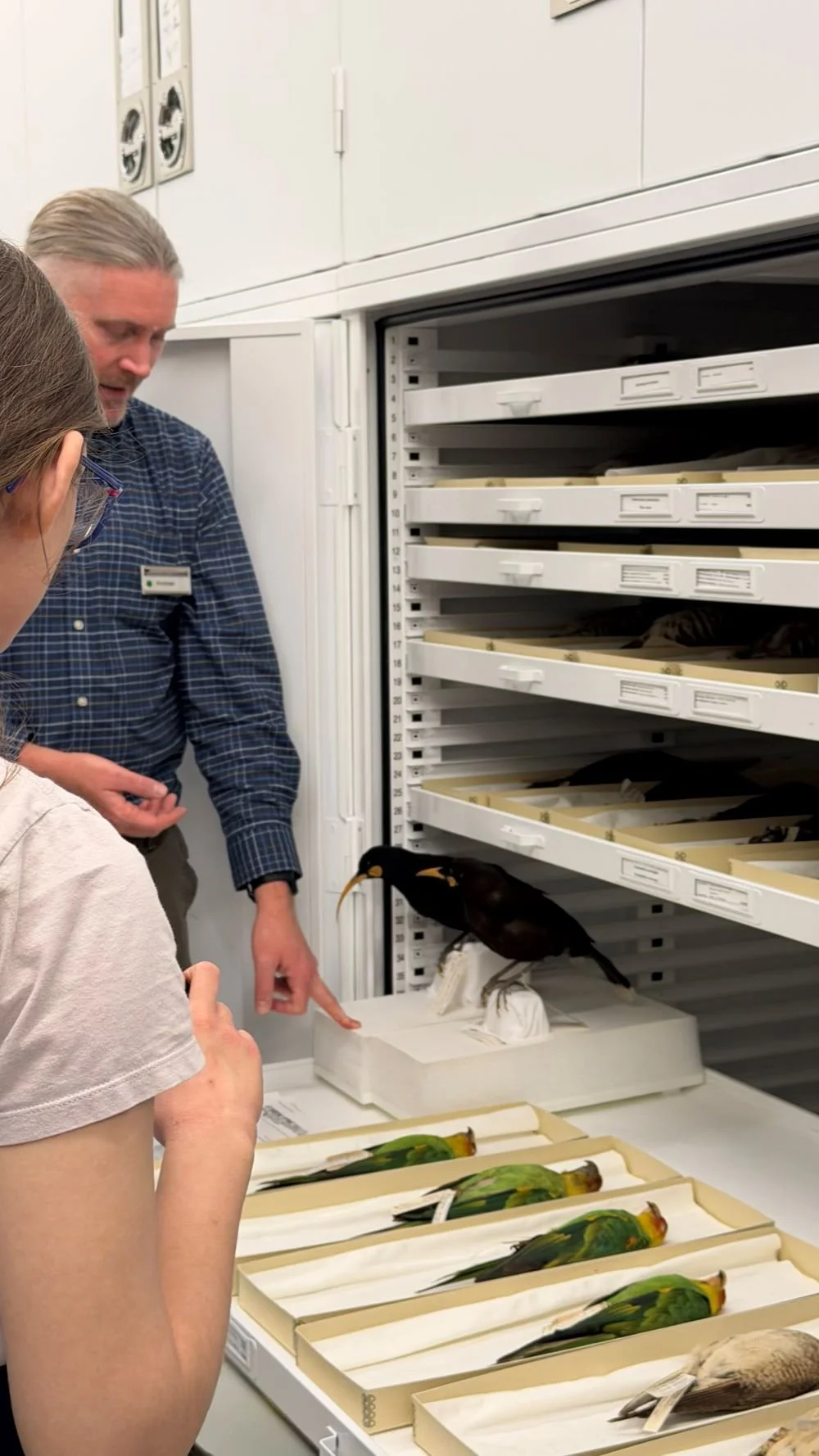
Learning about species we will never see alive. Carolina Parakeets (green birds in foreground) once ranged across the eastern US and were even reported in Colorado. Huia (black birds in back) are extinct birds from New Zealand and they had the greatest bill sexual dimorphism (fancy term for differences in size and shape between males and females) of any known bird species. Photo by Courtney Rella.
The group learned about how these samples are used for science, such as sending samples abroad for studies.
The tour concluded with the possibility of hopefully going back for a tour of the paleontology collection in the coming year.
To learn more about BCAS Teen Naturalists activities and find out when the next trips are, visit the Teen Naturalists webpage.