
October Nature Almanac: From Green and Bitter Gourds to Orange and Sweet Pumpkins
By Ruth Carol Cushman with Stephen R. Jones and Peter Ruprecht
October 2026
Centuries ago indigenous people in Mexico cultivated a small, greenish gourd (Cucurbita pepo) that evolved into today’s big orange pumpkin.
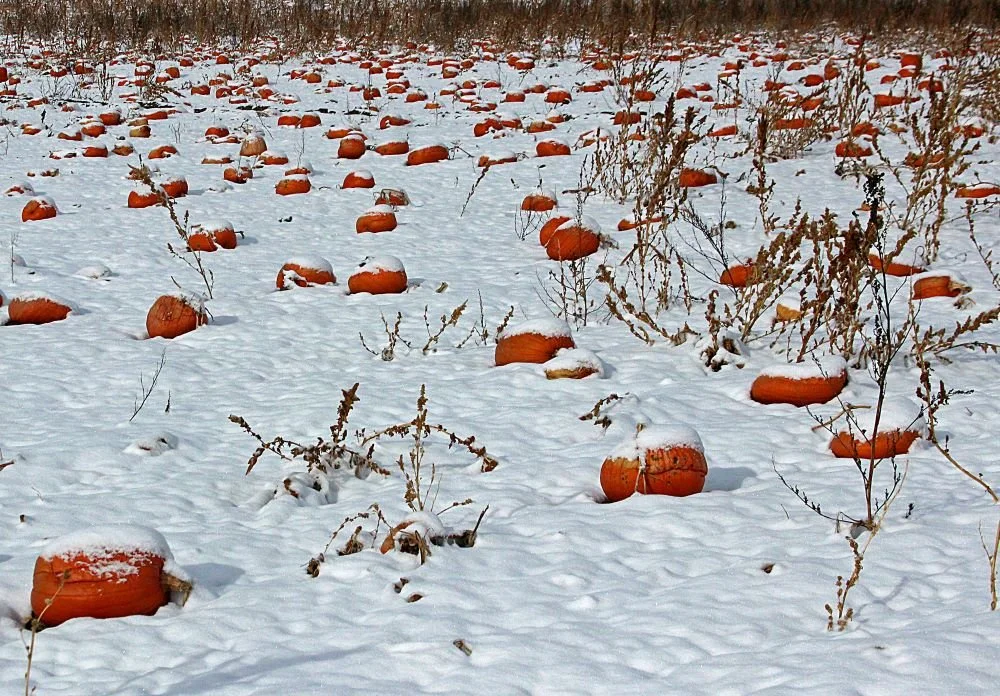
A field of pumpkins after an early snowfall near Stearns Lake. Often cattle are turned loose in pumpkin fields to eat the unsold pumpkins. Photo by Glenn Cushman
Fragments of C. pepo - discovered in a cave in the Oaxaca Valley - have been dated to between 7,000 and 5,500 BC. Ancestral Cucurbita plants predate humans in the Americas and appear to have been domesticated by different cultures stretching from Canada to Chile. These bitter tasting gourds with hard, durable shells were originally used as water and storage containers rather than food.
Gourd cultivation and the explosion of species spread quickly. There are now about 965 species in the Cucurbitaceae family that includes such vining annuals as gourds, squashes, melons, and cucumbers. Flora of North America says the plants “are likely to be found as non-persistent waifs* all over the world wherever they can be grown in temperate and upland tropical areas.”
-
To my surprise, “non-persistent waif” is an actual botanic term meaning a non-native that grows outside of cultivation but does not establish a permanent, self-sustaining population.
Buffalo gourds (Cucurbita foetidissima), possibly the only gourd native to Colorado, have retained their bitter taste and smell. Their range is from central and southwestern U.S. into Mexico and they thrive in arid or semi-arid habitats. They are also called stink gourds or fetid wild pumpkins.
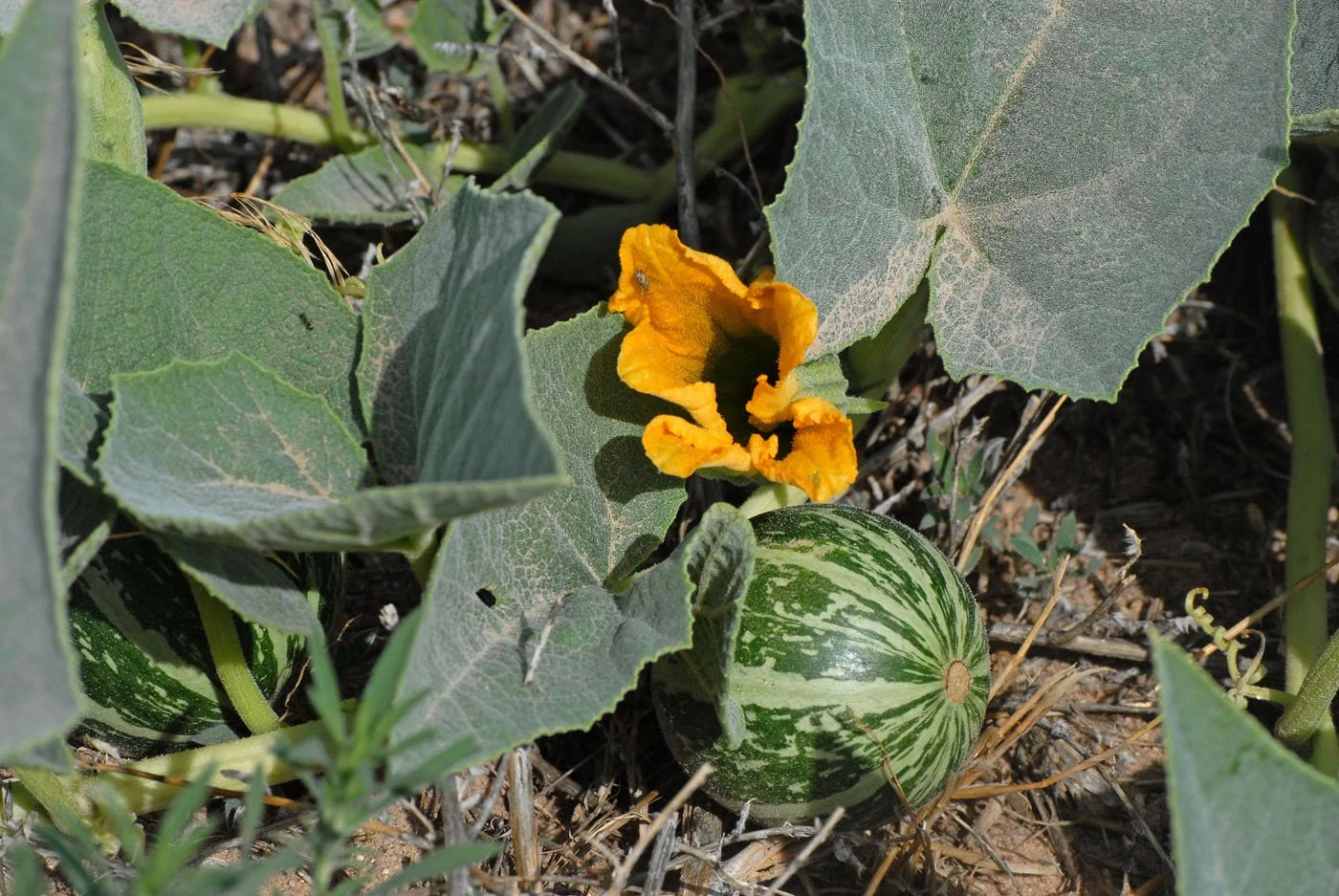
Buffalo gourds are cute to look at, and may resemble watermelons, but are bitter to taste. Photo by Stephen R. Jones
They are pollinated by only one species – squash bees resembling small bumblebees. It sounds like something from a fairytale. The male searches for a mate during the morning and then falls asleep in a bright yellow squash flower! Once dependent on pollen from buffalo gourds, these bees have evolved to feed also on other squashes. It’s a remarkable case showing that cultivated crops can change the behavior of wild pollinators.
In Wild Plants of the Pueblo Province, Bill Dunmire writes that both the seeds and the blossoms of buffalo gourd were eaten. The plant itself, however, contains cucurbitacins, “foul-smelling chemicals and perhaps the bitterest natural substances known to mankind.”
The Pueblo Indians used a buffalo gourd solution as an insect repellant and placed the gourd and leaves in all four quarters of their homes to keep out bugs. They made medicines from various buffalo gourd parts to treat chest pains, constipation, and swelling and used chunks of the gourd to clean clothes and pots.
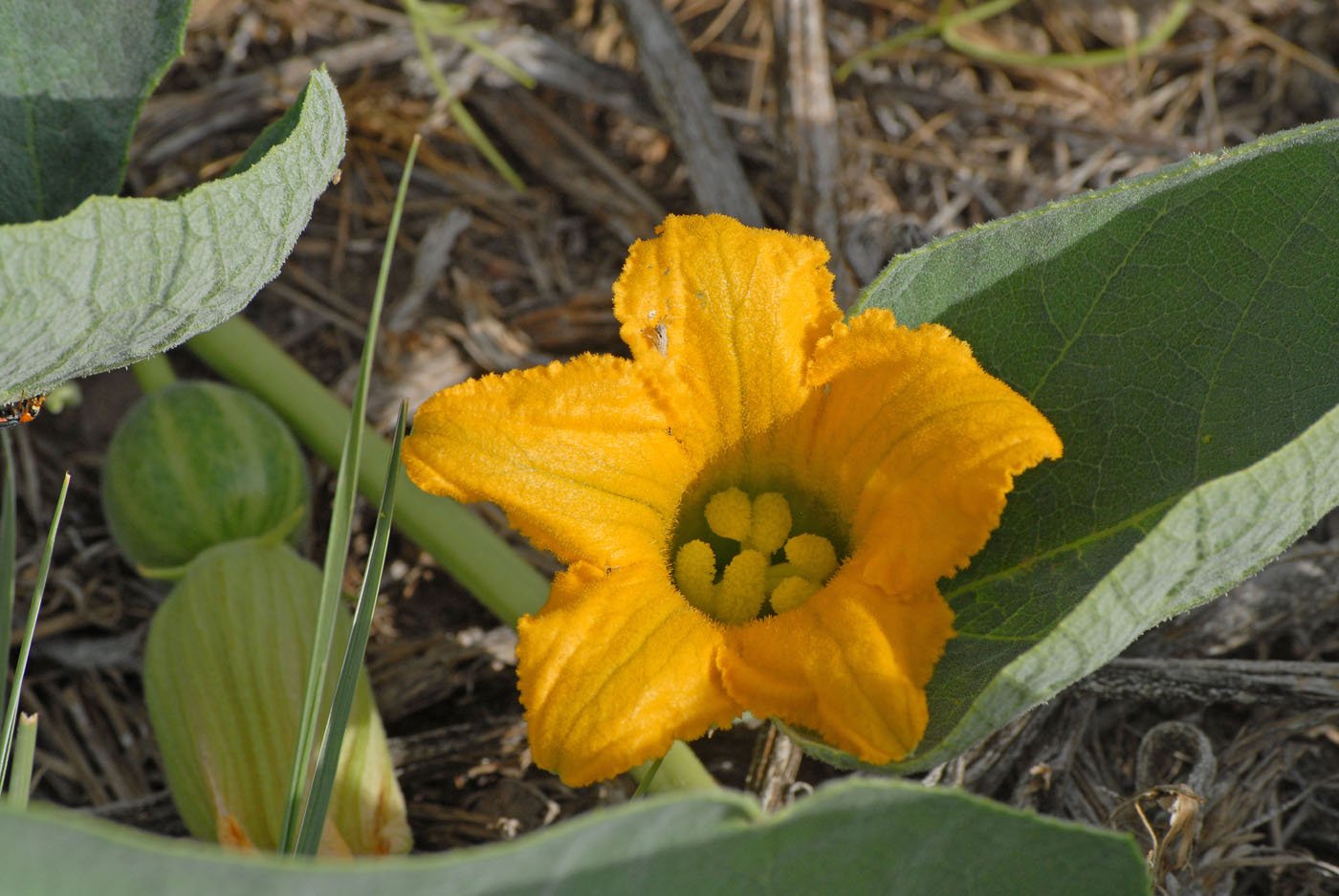
Buffalo gourd flower full of pollen with a fruit growing at the base of an old flower in the background. Photo by Stephen R. Jones
Kelly Kindscher writes in Edible Wild Plants of the Prairie that the Plains Indians also used buffalo gourds extensively. Believing the plants possessed mystic powers, they were careful not to wound the starchy root, which can weigh up to 178 pounds, when harvesting it. They processed the root to make a pudding similar to tapioca and ground the seeds to make a mush as well as using it medicinally.
Eventually, selective breeding of “cucurbits” resulted in a variety of edible species including over 100 varieties of pumpkins. But some are tastier than others.
Jack-o’-Lantern pumpkins that are bred for thick shells and bright colors tend to be stringy in texture and bland in taste. “Muggle,” which weighed 2,819 pounds and 4 ounces when it won the Guiness record in October 2025, probably would not have made a good pie. Bakers recommend small pumpkins with thin skins for pies and switching to a winter squash, such as butternut, if only carving pumpkins are available. Ornamental gourds belonging to the genus Lagenaria, often used for birdhouses, are not palatable.
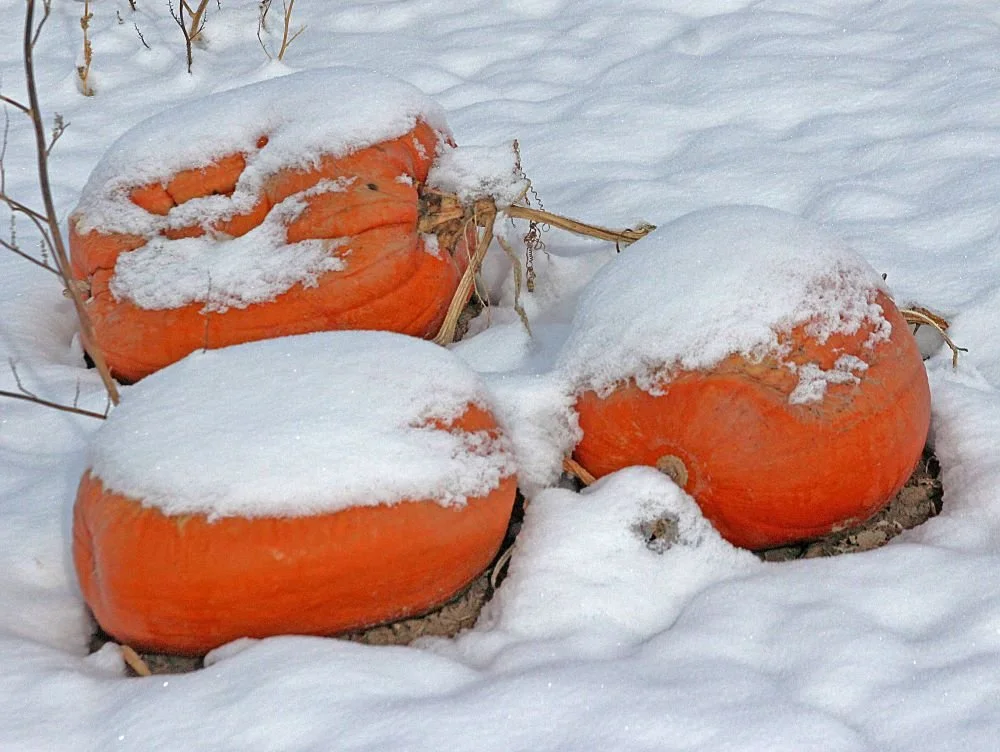
Even though they don’t make good pies, these big pumpkins are lovely to look at. Photo by Glenn Cushman.
As Halloween approaches, lift a cup of pumpkin spice latte in a toast to the bitter gourd that made pumpkin proliferation possible.
Other October Events
Black bears fatten up on wild fruits, raid garbage cans, and climb trees to nap. Save a bear; bring in your garbage can and bird feeders at night or secure them in a bear proof manner. Front Range Birding & Optics has options for bear-proofing your feeders.
Elk bulls bugle to attract harems along Coal Creek and Plainview Road south of Boulder, at Caribou Ranch, and in Golden Gate State Park.
Autumn colors peak in town. It’s the ideal time to take a walk in the Mapleton neighborhood.
Western rattlesnakes converge on communal hibernating sites in rocky hillsides and prairie dog colonies.
Bottle gentians, gumweed, and asters continue to bloom in the foothills.