
March Nature Almanac: Cavity-nesting Ducks Court and Dance
By Stephen Jones with Ruth Carol Cushman
March 2026
For some of us who have seen colorful Wood Ducks flying into tree cavities or their downy young leaping from woodpecker holes, cavity nesting may seem like an anomaly among waterfowl. Surprisingly, six of Colorado’s nesting ducks lay their eggs in tree cavities or cliff hollows.
In late winter and early spring we see Common and Hooded Mergansers performing their energetic mating rituals on prairie lakes and ponds. A half-dozen male hoodies will encircle a single female, splashing, throwing their heads back, fanning their pearl-white crests, and uttering cackling calls. The larger Common Merganser males chase females across the surface, raising their long beaks skyward and emitting bell-like calls.
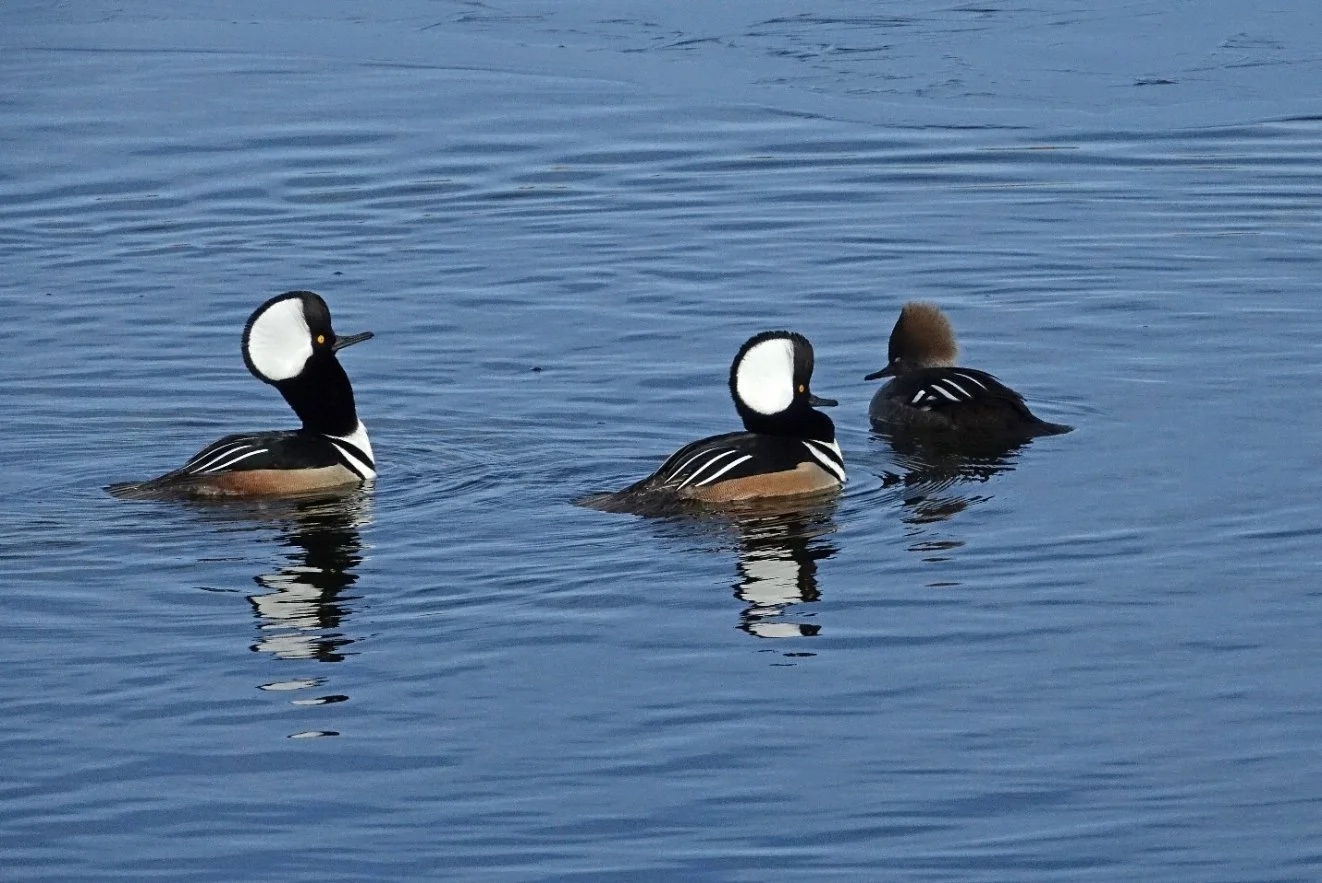
Courting Hooded Mergansers remind us of displaying prairie-chickens as the males encircle available females, cackling, fanning their feathers, and extending their necks. Stephen Jones photo.
By April, the hoodie pairs begin establishing nesting territories in deciduous woodlands bordering prairie ponds. The eggs take about a month to incubate, but once the young hatch they typically spend only about 24 hours in the nest cavity before pushing off from the rim and tumbling awkwardly toward the ground. Within a few weeks, they are entirely on their own.
Hooded Mergansers are a newly reported nesting species in Colorado, and all our observed young have fledged from artificial nest boxes installed around ponds north and south of Denver. In March look for males performing their mating displays across the surface of Prospect Lake and other ponds bordering Clear Creek west of Denver.
Our Common Mergansers often nest in riparian woodlands bordering mountain streams. In late spring, we sometimes see the females, with their distinctive red, swept-back head and neck feathers, paddling down Saint Vrain Creek near Lyons with a dozen fluffy young tucked in close behind.

Common Merganser family on Saint Vrain Creek. Joel Such photo.
The green-headed, long-billed males remind us of jet fighter planes as they zoom over the rapids at speeds approaching 50 miles per hour. Their close cousin, the Red-breasted Merganser, has been clocked at up to 80 miles per hour.
Mergansers are deep divers with long, serrated bills designed to catch fish, but much of their local diets consist of crayfish and other invertebrates gleaned off the bottom of ponds.
Barrow’s Goldeneyes nest in tree cavities in conifer forests surrounding high mountain lakes. Though not reported nesting within Boulder County since the early 1900s, they continue to breed along and near the Continental Divide in Rio Blanco, Jackson, and Clear Creek counties. Common Goldeneyes, which nest in boreal forests north of Colorado, are abundant on our prairie lakes throughout fall, winter, and early spring.
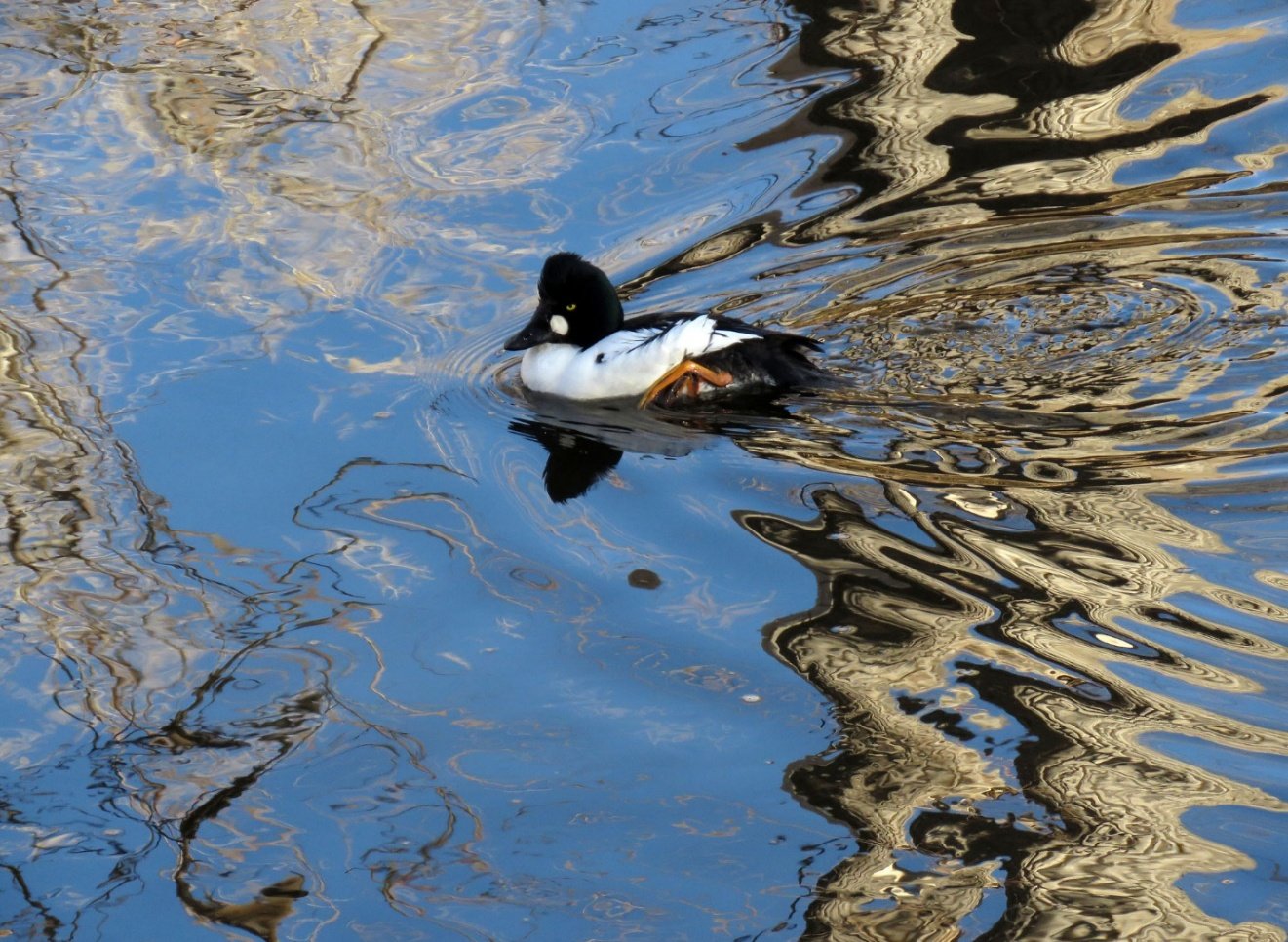
This Common Goldeneye was floating across the shimmering waters of Clear Creek, east of Golden, in February. Stephen Jones photo.
Buffleheads prefer aspen groves around freshwater ponds. During the second Colorado Breeding Bird Atlas in 2007-12, fieldworkers found pairs nesting in North Park, just south of the Wyoming border, but nowhere else in Colorado.
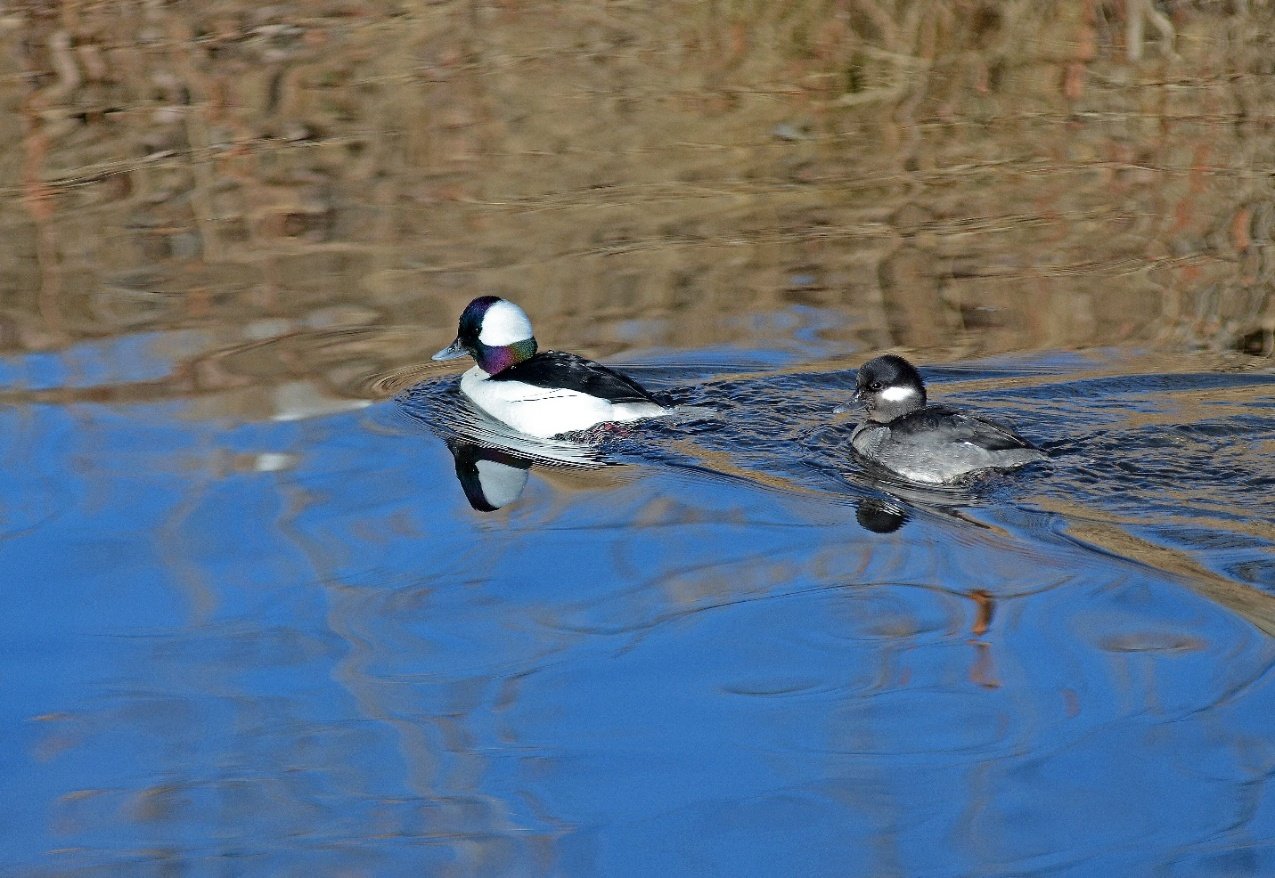
In winter and early spring, Bufflehead pairs cruise across Boulder County lakes and ponds. Stephen Jones photo.
The nesting distribution for most of these cavity-nesting species extends from the central Rockies and High Sierra north to Alaska and northern Canada. Recent studies indicate that breeding ranges are shifting northward as temperatures warm. It’s possible the Colorado could lose nesting Barrow’s Goldeneyes and Buffleheads within the next few decades.
However, the number of nesting ducks throughout North America has increased over the past 50 years as the 1918 Migratory Waterfowl Treaty and Federal Clean Water Act have protected their nesting habitat, while Ducks Unlimited and other hunting groups have lobbied for and donated hundreds of millions of dollars toward preserving nesting habitats. Waterfowl populations have leveled off during the past 10 years, a likely result of drought conditions on the northern Great Plains, where many of our dabbling ducks (as opposed to diving cavity-nesters) breed.
Other March Nature Events
Western, mountain, and eastern bluebirds all begin nesting in the foothills.
Honeybees sip nectar from Early Easter-daisies blooming on the Dakota Hogback paralleling US 36 north of Boulder.
Black-tailed prairie dogs are born.
Chorus frogs begin to sing.
Rainbow trout spawn.
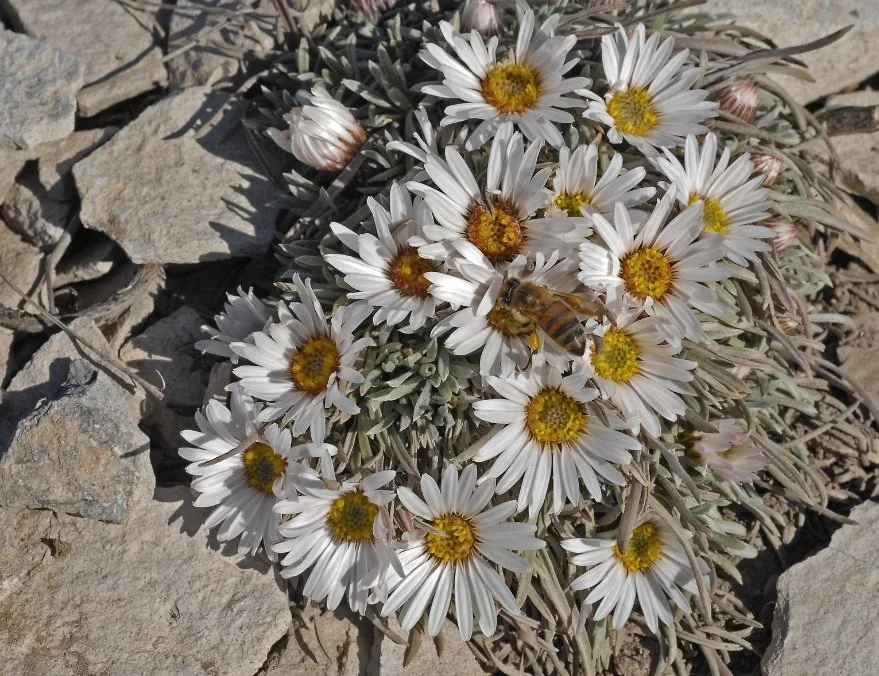
A honeybee sips nectar from Early Easter Daisies blooming on 100 million-year-old shales north of Boulder. Stephen Jones photo.
Nature Almanac is a monthly series by Stephen R. Jones and R. Carol Cushman, along with other guest contributors. Ruth Carol Cushman and Stephen Jones are authors of A Field Guide to The North American Prairie (Peterson Field Guides) and Wild Boulder County: A Seasonal Guide to the Natural World.