
May Nature Almanac: Cactus Blossoms Brighten a Dry Spring
By Stephen Jones with Ruth Carol Cushman
May 2026
During one of our driest late winters and early springs on record, our little ball cacti have been putting on vivid displays on rocky ridge tops in the foothills. Near Meyers Gulch picnic area at Walker Ranch Open Space, we found these Pediocactus bursting into bloom in late March.
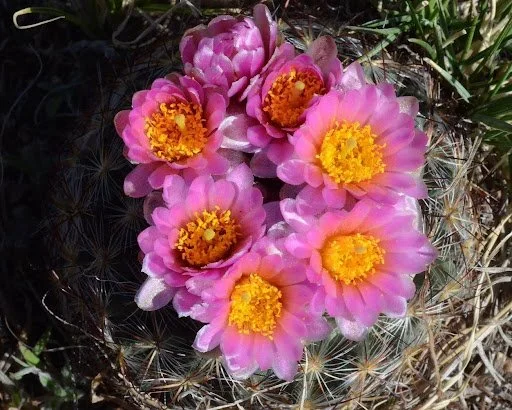
Ball cactus (Pediocactus simpsonii) began blooming at Walker Ranch in late March.
Cactus can thrive during drought conditions because their stems act as reservoirs which take in water at night and store it during hot days. Waxy coating on their stems and pads reduces heat intake and water loss, and spiny thorns shade the pads, further reducing evaporation. During winter, some of the smaller cactus species actually shrink into the ground.
We found honeybees, bumblebees, and wasps already sipping nectar and gathering pollen from the Pediocactus flowers at Walker Ranch in early April. Other pollinators of cactus flowers include various beetles, birds, and even long-nosed bats.
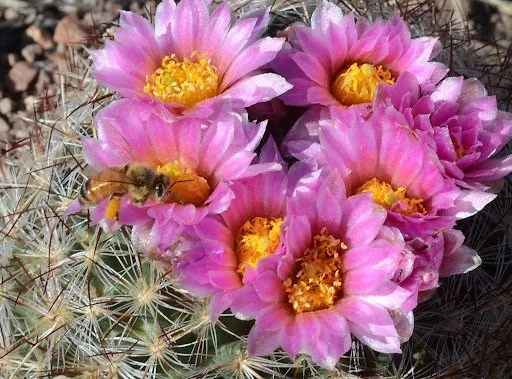
Honeybees and bumblebees were already sipping nectar and gathering pollen from the Pediocactus blossoms in early April. Note the large clump of pollen on this bees’ right leg.
Other small cacti blooming in Boulder County in spring include hedgehog cactus (Echinocereus) and nipple cactus (Coryphantha). Hens-with-chickens (Echinocereus viridiflorus), a small hedgehog cactus with yellow blossoms, grows in rosette forms, with the “mother” plant creating runners that sprout smaller rosettes (the “chicks”).
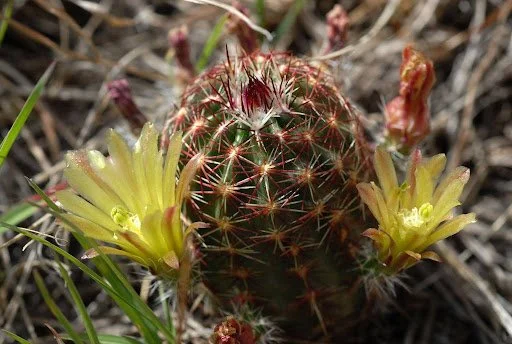
Hens-with-chickens (Echinocereusviridiflorus) grows commonly in Boulder County grasslands and mountain meadows. (The “chicks” are not clearly visible in this photo).
Nipple cactus (Coryphantha vivipara, which also thrive in Boulder County grasslands, sport spirally arranged tubercles that typically produce copper-colored or pale orange flowers and small red fruits.
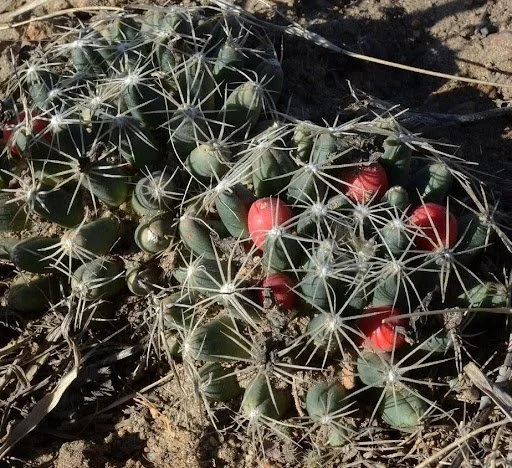
We found this fruiting nipple cactus along an irrigation ditch on Marshall Mesa last June.
Larger cactus that bloom in late spring include prickly-pear (Opuntia) and cholla (Cylindropuntia). Plains prickly-pear (Opuntia macrorhiza and O. polyacantha) grow abundantly on the plains, mesas, and mountain parks. Brittle cactus (Opuntia fragilis) thrives in ponderosa pine forests of the outer foothills.
Opuntia macrorhiza produces plump, red fruits that have been coveted as food by people of the plains for thousands of years.
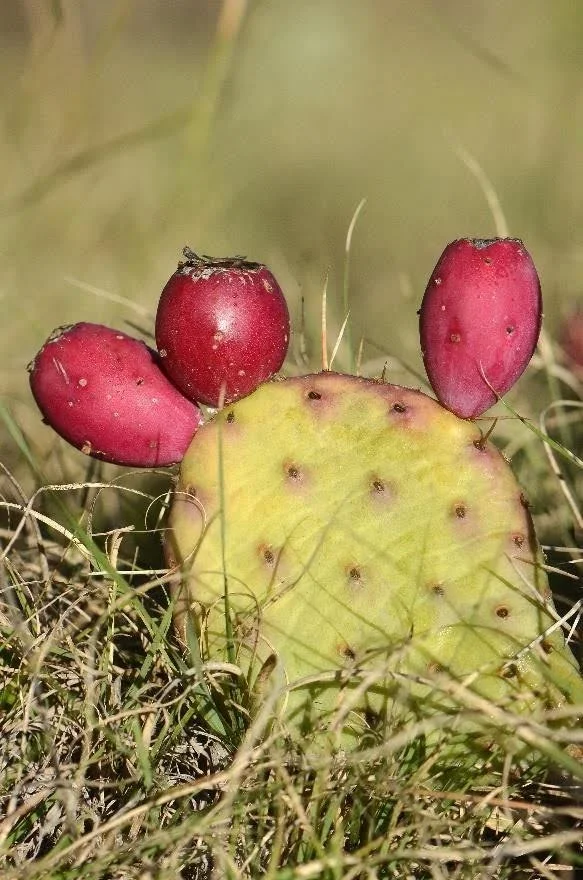
Opuntia macrorhiza fruits persist into early fall.
After removing the spines and prickly hairs, the fruits can be eaten whole or used to make candies or jellies. The pads of this relatively spineless species are also delicious and nourishing. However, harvesting of any kind of cactus is not permitted on Boulder Open Space and Mountain Parks or Boulder County Open Space lands, and collecting uncommon cactus on forest service lands can threaten the species’ survival.
Opuntia polyacantha typically has more spines than O. macrorhiza and produces quickly wilting, bronze fruits. But their yellow flowers are dazzling in late spring.
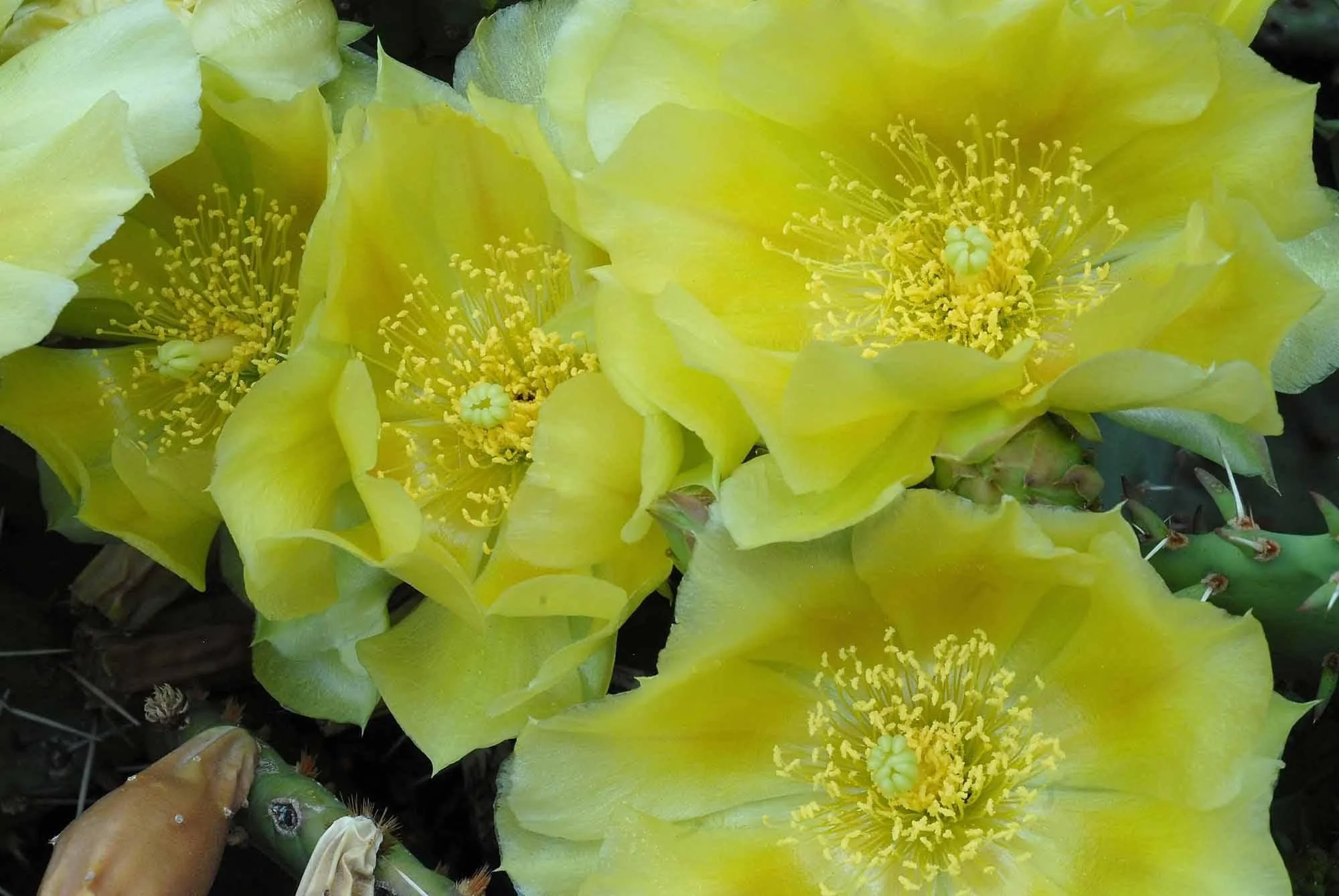
Opuntia polyacantha blossoms in May.
While cholla grow naturally throughout southeastern Colorado, any plants you see in Boulder County are likely garden varieties. Nevertheless, their deep pink blossoms brighten our communities throughout spring and summer, reminding us of all the gifts that the cactus family brings to our lives.
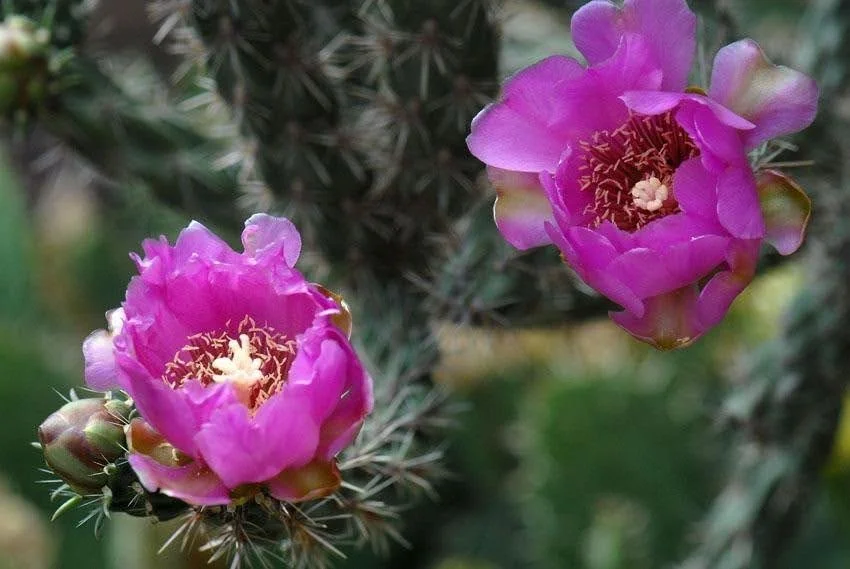
This lovely cholla was blooming in a Boulder Shanahan Ridge garden in early June.
Deepest thanks to plant ecologist Lynn Riedel and nature writer and photographer Christina Nealson (http://christinanealson.com/) for reading this article for accuracy and clarity. Scientific names are from William A. Weber and Ronald C. Wittmann, Colorado Flora, Eastern Slope, fourth edition. All photos are by Stephen Jones.
Other May Events
Great Horned Owl young fledge from stick nests and tree-cavity nests and begin hooting with their parents. Their vocalizations are distinctly higher than their parents’.
Warblers, vireos, and other Neotropical migrant birds arrive from Mexico, Central America, and South America. Monarch butterflies arrive from the mountains of central Mexico.
Tassel-eared squirrels engage in “mating bouts,” chasing one another through the ponderosa pines.
Cecropia and polyphemus moths hatch from cocoons spun on deciduous trees the previous fall.
Ponderosa pines and other conifers release great clouds of golden pollen.
Nature Almanac is a monthly series by Stephen R. Jones and R. Carol Cushman, along with other guest contributors. Ruth Carol Cushman and Stephen Jones are authors of A Field Guide to The North American Prairie (Peterson Field Guides) and Wild Boulder County: A Seasonal Guide to the Natural World.
Tune in to Boulder County Nature Almanac recordings the first Friday of each month at 8:05 AM on KGNU public radio.