
February Nature Almanac: Wollemi Pines Give Us Hope For The Future
By Ruth Carol Cushman with Stephen R. Jones
February 2026
When in despair for the world and for endangered species, think of Wollemi pines. Wollemia nobilis trees were abundant during the Cretaceous Period and may have been browsed on by dinosaurs. The strange trees, known only from leaf fossils, were thought to have gone extinct two million years ago.
Then in 1994 park ranger David Noble rappelled into a remote Australian canyon and discovered a small grove of Wollemi pines, numbering fewer than 100 trees. The exact site is kept secret to protect the few remaining wild trees from humans.
Why did this small pocket of trees survive? It may have been because the canyon protected them from fires and direct sun and provided extra humidity. In this environment they can reach 40m tall and live for centuries.
The “dinosaur trees” have a rounded crown, “bubbly” bark (the Wikipedia editor compares it to Coco Pops), and branches covered in thick, flat needles in two parallel rows. With fern-like foliage, they look nothing like Colorado’s ponderosas, lodgepoles, or limber pines but do somewhat resemble their close cousins, Norfolk pines.
Several organizations joined forces to propagate Wollemis from cone seeds. Soon the National Geographic Society was offering 10-inch saplings for sale, describing them as “one of the greatest living fossils discovered in the twentieth century.” Offsprings from the original trees have now been planted around the world. Many are in greenhouses, but others thrive outdoors in mild, temperate climates.
Boulderite Judy McKeever bought a small sapling for her husband Rod, and they nicknamed it Wally, short for Wollemi. (Audubon member Elaine Hill also bought one, but hers did not survive.) The McKeevers nurtured Wally in their home for many years, lugging it from basement to deck each year until it became too heavy. Last December the two CU alumni donated the six foot tree to the University of Colorado Ecology and Evolutionary Biology (EBIO) Greenhouse where it is flourishing in a warm corridor.
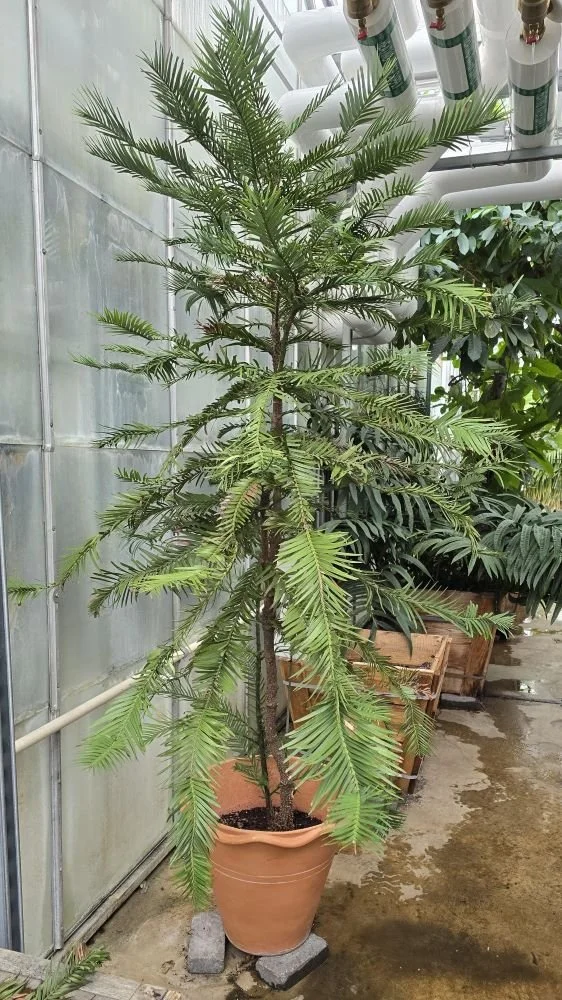
Wally, the awe-inspiring Wollemi tree is thriving in a protected corridor of the EBIO Greenhouse. Photo by Carol Cushman.
Malinda Barberio, Greenhouse Manager, hopes the hermaphroditic plant will eventually produce cones from which they can raise more Wollemi babies.
If you didn’t know Wally’s history, you might overlook it on a visit. Compared to the flamboyant orchids in the greenhouse, it appears a bit insignificant.
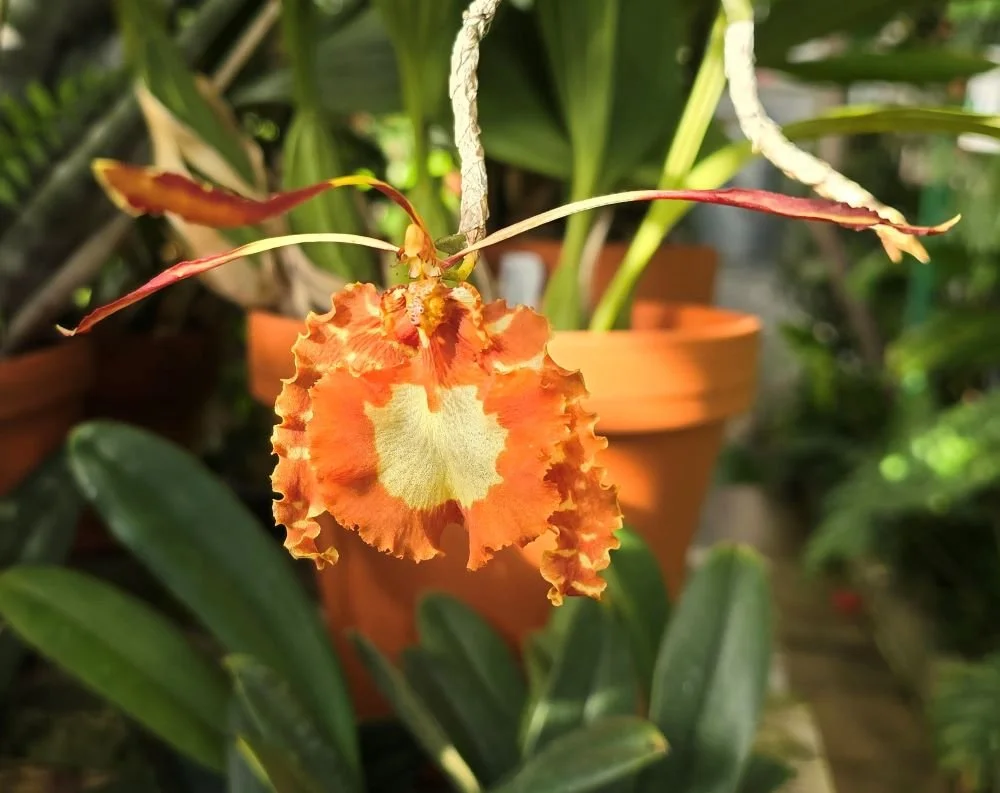
Many orchids and other beautiful plants also flourish in the EBIO Greenhouse. Photo by Carol Cushman.
Wally is not the only back-from-the-edge-of-extinction plant in the greenhouse. Two Brighamia plants, native to Hawaii, look like bulbous balls topped with a green umbrella. When a species of hawk moth, their obligate pollinator, became extinct, they could no longer reproduce unless pollinated by hand. As a result, they became extinct in the wild but still thrive in greenhouses.
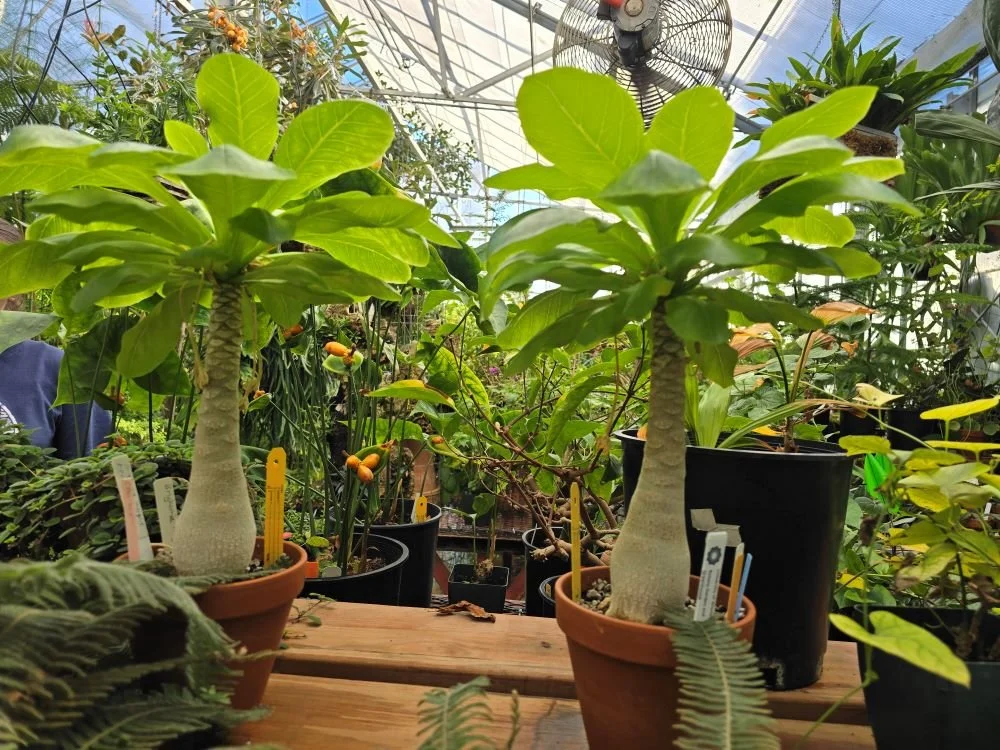
These Brighamia plants are extinct in the wild but thrive in greenhouses, such as the EBIO Greenhouse, where they can be pollinated by hand.
EBIO Greenhouse also contains many weird and wondrous plants not threatened with extinction. The corpse flower (Amorphophallus titanum) will fill the air with the scent of a putrefying carcass when it blooms. Many of us will sign up for a tour and a sniff when that happens.
Greenhouse tours are free, with donations requested. Malinda plans to use money from donations to start an aquatic habitat. To register for a public tour, visit the EBIO Greenhouse website. To arrange a group tour, contact ebiogreenhouse@colorado.edu
Because of the efforts of dedicated scientists, Wollemi trees have been rescued from extinction. Perhaps there is hope yet for our threatened world.
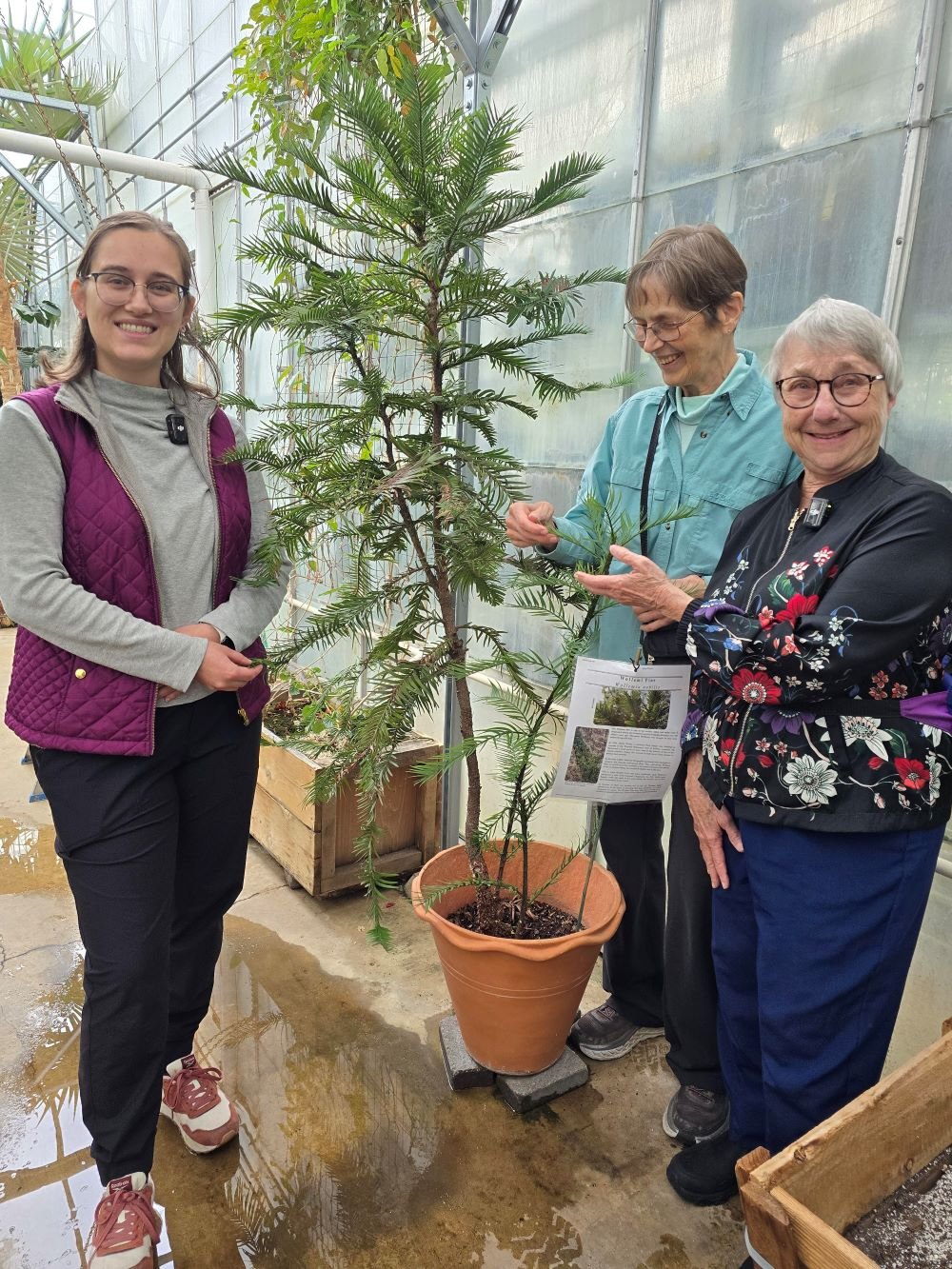
Kit Basom and Carol Cushman make friends with Wally as EBIO Greenhouse manager, Malinda Barberio, looks on with pride. Photo courtesy of Carol Cushman.
Other February Nature Events
Western Meadowlarks have begun to sing at Stearns Lake where the Bald Eagle pair seems to be firmly bonded
Unexpected birds report on eBird in January included a Great Egret (!) at Golden Ponds, a Yellow-bellied Sapsucker at Boulder Community Gardens, and a Brewer’s Blackbird at Stearns Lake.
Easter daisies (Townsendia sp.) usually begin to bloom on shale slopes and magenta filarees (Erodium cicutarium, stork’s bill) on disturbed ground.
Great Horned Owls continue to sing duets and nest. You can tell the sexes apart because the female sings more notes at a higher pitch. (Listen to their songs on All About Birds)
Mourning cloak and Milbert’s tortoiseshell butterflies may emerge from crevices behind bark on warm days to feed on oozing sap.
Nature Almanac is a monthly series by Stephen R. Jones and R. Carol Cushman, along with other guest contributors. Ruth Carol Cushman and Stephen Jones are authors of A Field Guide to The North American Prairie (Peterson Field Guides) and Wild Boulder County: A Seasonal Guide to the Natural World.